
Boundaries, Ultimatums, and Compromises for Crossdressers: When Love Has Rules
By Jenn der Bentson
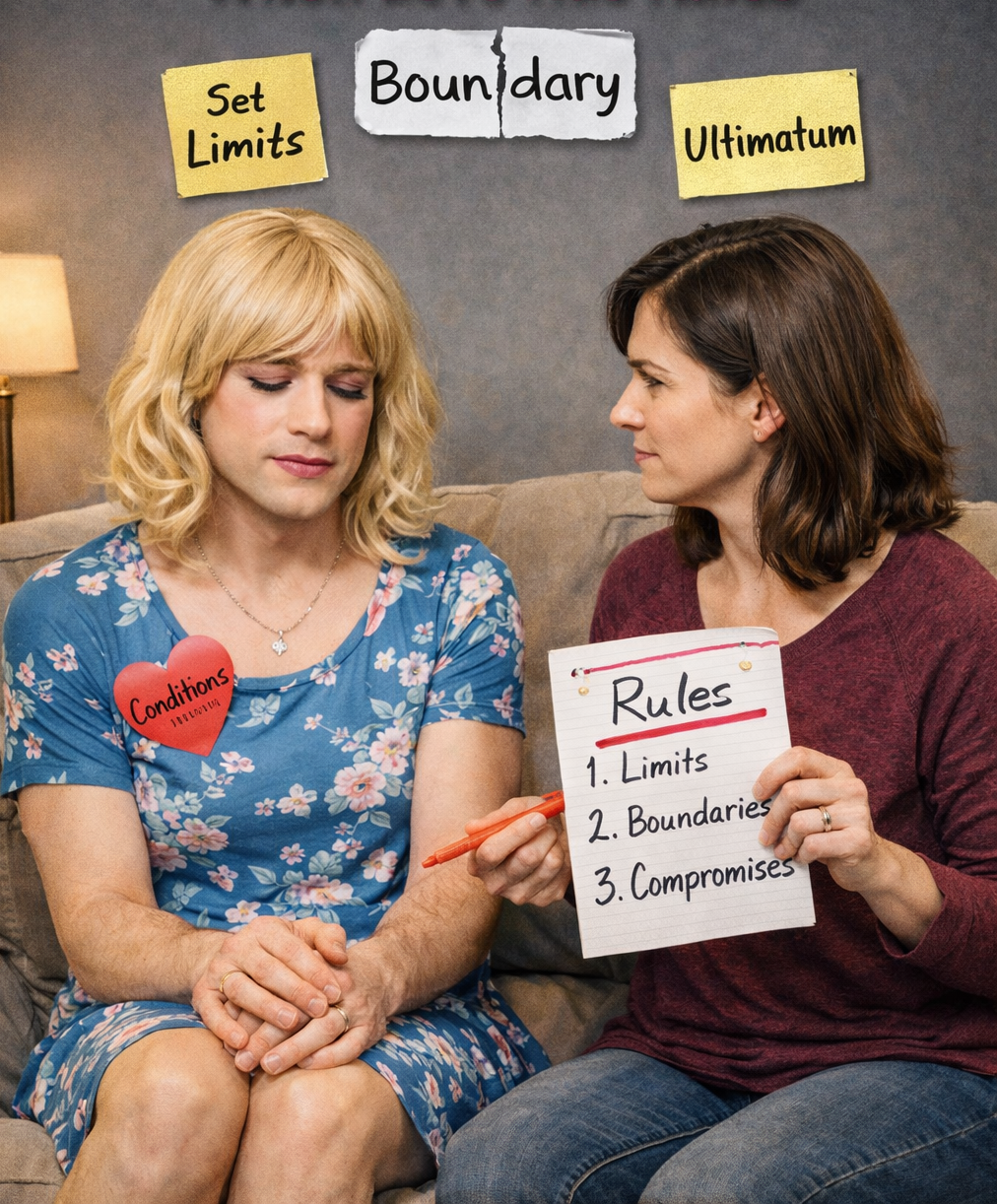 Disclosure is often described as one of the most transformative moments in a crossdresser’s life. It is the moment when private fantasies, carefully guarded outfits, and the intimate rhythms of personal identity collide with someone else’s reality—often the reality of a partner you love. Yet, coming out in a relationship is rarely a singular, triumphant revelation. It is usually the beginning of a negotiation: a subtle, sometimes fraught balancing act between boundaries, ultimatums, and compromises. How these negotiations unfold can profoundly shape the intimacy, trust, and longevity of the relationship.
In this article, we’ll explore how crossdressers and their partners navigate these delicate dynamics, examining how rules can both safeguard and inadvertently suffocate love. We’ll look at common challenges, potential pitfalls, and practical strategies for fostering understanding without eroding individual freedom or intimacy.
The Moment of Disclosure: Opening Pandora’s Box of Rules
For many crossdressers, disclosure is not just about honesty—it is a test of emotional safety. Questions immediately arise: Will my partner accept me? Will they see me differently? And often, even subconsciously, both parties begin to think about rules. These rules can take many forms. They may be explicit, like “No cross-dressing at home when guests are present,” or implicit, like “I’m fine with you dressing occasionally, but I hope it doesn’t replace our intimacy.” Each rule carries an emotional weight, a signal of both acceptance and limitation.
It is important to distinguish between boundaries and ultimatums. Boundaries are protective measures, often designed to safeguard emotional well-being or privacy. For example, a partner might ask that cross-dressing remain a private activity to protect family reputation or personal comfort. Ultimatums, on the other hand, demand compliance under threat of relational loss. While boundaries are negotiable and flexible, ultimatums tend to freeze dialogue and create stress. Crossdressers often report that disclosure is followed by a period of intense negotiation, where partners test limits and gauge comfort. During this phase, it is easy to misinterpret boundaries as rejection or to feel pressured by ultimatums. Awareness of these distinctions—and a conscious effort to discuss them—can prevent unnecessary conflict.
Why Boundaries Can Be a Blessing
Boundaries are not inherently restrictive. In fact, for couples navigating cross-dressing, they can serve as an anchor for intimacy, creating a shared understanding of what feels safe and acceptable. Time and space boundaries, for instance, allow crossdressers to express themselves during certain periods, such as weekends or evenings, without overwhelming daily routines or social obligations. Privacy boundaries may limit cross-dressing to the bedroom or a personal closet space, protecting a partner’s comfort while allowing the crossdresser to explore their identity in a controlled environment. Emotional boundaries also matter; partners may request open communication about feelings or fantasies to prevent insecurity from taking root.
Boundaries work best when they are reciprocal. Just as the partner sets limits, the crossdresser can establish boundaries to protect their sense of self, privacy, and emotional needs. Mutual respect in these negotiations fosters trust, rather than resentment. When both partners feel heard and safe, boundaries can become a framework that protects intimacy rather than restricting it.
When Ultimatums Enter the Room
Ultimatums, by contrast, are more volatile and often emerge from fear, confusion, or unresolved expectations. For a partner, an ultimatum may reflect a perceived incompatibility between their identity and the crossdresser’s expression. Statements such as “You can’t cross-dress if we want to maintain a normal social life” or “Either you stop dressing, or we can’t be together” may clarify expectations, but they also force the crossdresser to choose between authenticity and attachment.
While ultimatums may create short-term clarity, they rarely resolve underlying tension. They can lead to stress, guilt, secrecy, and long-term friction. Often, temporary compliance does little to address the crossdresser’s ongoing desire or identity needs. Awareness is key: recognizing when a partner’s demands stem from fear rather than rational boundaries allows couples to address the underlying concerns directly. Open discussion and professional guidance can sometimes transform rigid ultimatums into collaborative negotiation.
The Art of Compromise
Most healthy relationships survive disclosure not through absolute acceptance or prohibition, but through compromise. Compromise requires emotional intelligence, empathy, and patience. It is a delicate dance between authenticity and partnership, often involving trial and error. Some common compromises include limiting cross-dressing to certain times, incorporating shared involvement such as shopping trips or outfit selection, and gradually increasing exposure to the partner over time.
Compromises are most effective when revisited periodically. Comfort levels, desires, and social circumstances evolve, and what feels manageable today may feel restrictive tomorrow. Treating compromises as flexible agreements rather than fixed rules reduces resentment and allows both partners to grow. These agreements can turn moments of potential conflict into opportunities for connection and understanding, rather than sources of tension.
Communication: The Lifeline of Negotiation
All boundaries, ultimatums, and compromises rest on the foundation of communication. Open, honest dialogue allows both partners to express needs without fear of judgment. Using “I” statements, for instance, frames requests and concerns from personal experience rather than blame. Separating feelings from behaviors can help clarify that a partner may dislike certain actions but still love the person, preventing misinterpretation.
Couples who schedule regular check-ins often experience higher satisfaction and lower conflict levels. These conversations allow for adjustments and reinforce mutual respect. Seeking understanding rather than victory, and maintaining openness even in disagreement, fosters a culture of empathy. Effective communication also helps prevent secretive behavior, which may temporarily preserve peace but erodes trust and intimacy over time.
When Rules Protect Intimacy—and When They Suffocate It
Rules in cross-dressing relationships are double-edged. On one hand, they protect intimacy. Clear boundaries prevent emotional harm and reduce stress for partners uncomfortable with certain aspects of cross-dressing. Structured compromises allow both partners to participate and plan around the activity, turning potential tension into shared understanding. Open discussions about limits foster empathy and connection, reinforcing the relationship’s foundation.
On the other hand, rigid rules can quietly suffocate a relationship. Overly strict restrictions may limit self-expression, creating frustration or resentment. Ultimatums can undermine intimacy, producing fear, avoidance, or tension. Hidden resentment may grow silently when rules are followed outwardly but leave unspoken dissatisfaction in their wake. Navigating this balance requires mindfulness, flexibility, and periodic reassessment. Rules should serve the relationship, not restrict its vitality.
Beyond Rules: Embracing Identity Together
Ultimately, the healthiest relationships treat cross-dressing not as a threat but as a facet of identity worthy of understanding. Crossdressers can support relationship health by being transparent about desires, respecting partner comfort, and exploring shared activities that integrate cross-dressing into the relationship. Partners, in turn, can approach disclosure with curiosity, set limits that are protective rather than punitive, and remain aware of underlying fears, seeking dialogue rather than control.
A successful negotiation reframes cross-dressing as an opportunity for intimacy rather than conflict. Shared shopping trips, dressing routines, or private celebrations of identity can become points of connection. When rules are approached with empathy, clarity, and flexibility, they transform moments of tension into opportunities for understanding, intimacy, and mutual growth.
Many crossdressers and their partners report that the early days following disclosure are the most critical. Gradual integration, for example, can allow partners to adjust emotionally and eventually participate in shared activities. Ultimatums, while seemingly clear, often backfire by fostering secrecy and anxiety. Couples who start with strict rules often find that relaxing them over time, as trust builds, creates a healthier dynamic. Regular, open dialogue prevents isolation and strengthens the relationship, turning cross-dressing from a potential source of conflict into a shared expression of intimacy.
Love with Flexibility
Cross-dressing is an intimate aspect of identity, and disclosure is only the first step in integrating it into a shared life. Boundaries, ultimatums, and compromises are part of the process, each carrying the potential to protect or strain the relationship. Boundaries safeguard intimacy and emotional well-being, ultimatums clarify expectations but often create tension, and compromises can bridge gaps and foster understanding.
Underpinning all of these is communication—a continuous, patient conversation that allows both partners to express needs, negotiate rules, and adapt over time. The ultimate lesson is that rules are not meant to constrain love—they are meant to guide it. When approached thoughtfully, with empathy and flexibility, they can transform moments of potential conflict into opportunities for connection, acceptance, and enduring love. Disclosure may open Pandora’s box, but with communication, compromise, and compassion, that box can become a treasure chest—filled not with fear or restriction, but with understanding, affirmation, and mutual growth.12
Comments
Boundaries, Ultimatums, and Compromises for Crossdressers: When Love Has Rules — No Comments
HTML tags allowed in your comment: <a href="" title=""> <abbr title=""> <acronym title=""> <b> <blockquote cite=""> <cite> <code> <del datetime=""> <em> <i> <q cite=""> <s> <strike> <strong>