
How Technology Has Transformed Crossdressing: How Innovations have Changed Crossdressing
by Jenn der Bentson
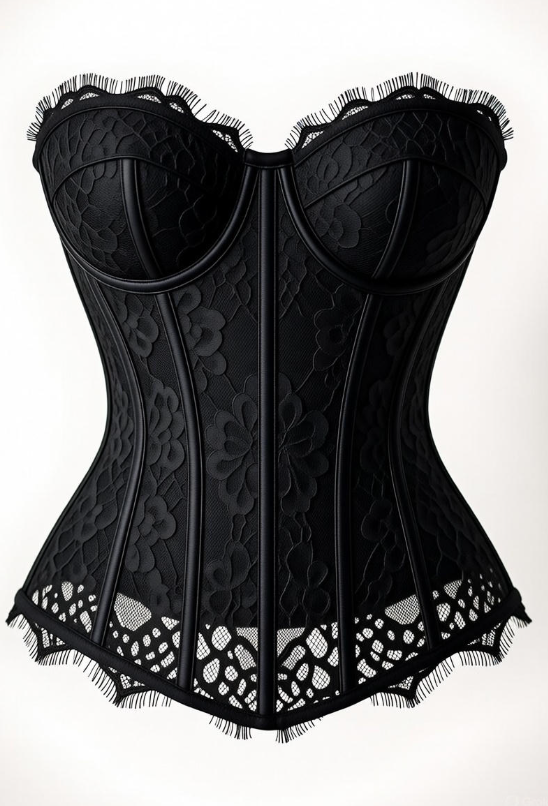 In the past few decades, the art and experience of crossdressing have evolved alongside astonishing technological and material advances. What was once limited by crude fabrics, clumsy wigs, and heavy makeup has now entered a new era of realism and comfort. Today, male-to-female crossdressers have access to innovations that not only improve presentation but also make the entire process more enjoyable, believable, and sustainable.
From silicone body forms that mimic natural curves to voice training apps that reshape vocal resonance, technology has made it easier than ever to bring out the feminine within. Below are eight innovations that have redefined how crossdressers express, experiment, and embody their authentic selves — with practical tips on how to make the most of each.
Shapewear and Compression Garments: Comfort Meets Curves
Shapewear has undergone a quiet revolution. Once the domain of restrictive corsets and heavy girdles, today’s pieces use elastic microfibers and 3D knitting technologies to create targeted compression zones without sacrificing comfort. The result is smooth, breathable garments that refine contours rather than distort them.
Crossdressers benefit particularly from this technology because it bridges the gap between masculine and feminine anatomy in a discreet way. Brands now produce gender-inclusive shapewear with longer torsos, wider shoulders, and flexible gussets — acknowledging that not all women’s bodies are built the same.
A common layering technique includes a high-waisted shaping brief to smooth the abdomen, combined with padded hips or butt enhancers to create a natural transition into dresses and skirts. Full-body suits are ideal for tight dresses or performance outfits, while waist trainers can enhance hourglass form for short-term wear or photoshoots.
Comfort tip: look for seamless construction and moisture-wicking materials. When shapewear fits properly, it should move with the body, not fight against it — allowing confidence and posture to follow naturally.
Gender-Affirming Fashion and Tailoring: Inclusive Design in the Mainstream
Fashion itself has embraced inclusivity in ways that directly benefit crossdressers. Where once sizing was rigid and binary, clothing brands now recognize diversity in shape and proportion. The result: gender-affirming fashion technology that caters to bodies outside traditional molds.
Modern design processes allow designers to create garments that fit broader shoulders, longer torsos, or narrower hips while maintaining the feminine silhouette. This innovation means crossdressers can now find dresses, blouses, and skirts that drape correctly without custom tailoring.
Fabrics have also evolved. Stretch-blend textiles, 3D knit dresses, and memory fibers allow for adaptive fit across body types. Even lingerie has followed suit, offering cups and bands proportioned for those with flatter chests or wider ribcages, making layering and presentation more natural.
Online retailers now include virtual fitting tools that simulate garment fit based on uploaded body dimensions. This is especially valuable for those who prefer privacy when shopping for feminine attire. The fusion of technology and inclusivity has turned what was once an obstacle — sizing — into an empowering choice.
Advanced Hair Removal Technologies: The Smooth Revolution
Smooth, hair-free skin remains one of the most affirming sensations of feminine presentation. While shaving and waxing were once the only options, the advent of laser and IPL (intense pulsed light) treatments has changed the landscape completely.
Laser hair removal targets melanin in the follicle to permanently reduce regrowth over multiple sessions. Modern diode and Alexandrite lasers are faster, less painful, and effective on a wider range of skin tones than early-generation machines. Home IPL devices, while less powerful, have brought maintenance-level treatment into private spaces.
For crossdressers who wish to maintain a polished appearance without daily shaving, a professional laser series followed by at-home upkeep can yield lasting results. Areas like the face, chest, and legs benefit most from this technology, as it minimizes irritation and allows for more natural skin texture — which in turn improves makeup adhesion and comfort in hosiery or lingerie.
Skin-care technology complements this process. Soothing post-treatment gels with aloe and peptides accelerate recovery, while exfoliating serums prevent ingrown hairs. The combination of permanent reduction and proper maintenance translates directly into time saved and confidence gained.
Silicone Breast Forms: The Foundation of Realism
Breast forms have come a long way since the days of foam pads and homemade stuffing. The introduction of medical-grade silicone transformed them into something almost indistinguishable from natural anatomy. Silicone forms now move, feel, and warm up just like real tissue, thanks to the material’s soft, skin-like elasticity and ability to conduct body heat.
Modern options range from teardrop shapes for subtle curves to full-coverage styles that mimic the natural contour of the chest. Many attach directly with medical adhesive or come with realistic skin textures and nipples designed to look authentic even under thin fabrics.
For practical use, adhesive-backed forms provide the most natural appearance when worn under low-cut tops or lingerie. Crossdressers looking for comfort during long wear should look for lightweight gel-filled or hollow-core models, which breathe better while still maintaining natural movement. Silicone breast forms are now available in dozens of sizes, skin tones, and profiles, allowing wearers to match proportionally to their body and style preferences.
Hip Pads and Body Shapers: Sculpting a Feminine Silhouette
Creating a believable feminine figure often comes down to contour and proportion. Advances in foam and silicone padding technology have made it much easier to craft the classic hourglass silhouette — soft hips, a curved rear, and a defined waist.
Today’s hip pads are seamless, flexible, and anatomically shaped. High-end brands mold their pads using 3D body scans to ensure realistic gradients between padding and skin. When paired with a snug pair of shaping tights or a bodysuit, the effect can be remarkably natural. Silicone versions move fluidly when walking or sitting, avoiding the stiff, bulky appearance of earlier padding solutions.
Body shapers and compression garments also contribute significantly. Waist cinchers made with elastomeric textiles and breathable mesh not only slim the waist but help blend the transition between torso and hips. For those seeking a full-body transformation, shapewear bodysuits combine bust, waist, and hip control for smooth lines under dresses or fitted clothing.
Practical tip: start with moderate compression garments before upgrading to heavy-duty waist trainers. Comfort and mobility should always come before tightness — a believable feminine presence comes from ease and confidence, not just measurement ratios.
Lace-Front and HD Lace Wigs: Real Hairlines, Real Confidence
Few developments have had a more dramatic effect on crossdressing realism than the lace-front wig. Unlike traditional wigs, which had blunt edges and visible seams, lace-front wigs feature an ultra-thin lace mesh at the front that allows for natural hairline simulation. When properly applied with wig adhesive or tape, the lace disappears against the skin, making it look as if the hair is growing directly from the scalp.
Recent innovations like HD lace — a nearly invisible, feather-light version — have made this illusion even more convincing. Combined with high-quality synthetic or human hair fibers, these wigs can be styled, curled, and parted in any direction.
For best results, choose a wig cap that matches your skin tone and secure your natural hair as flat as possible. A dab of foundation along the lace can help blend it seamlessly. Crossdressers experimenting with new looks can also benefit from heat-resistant synthetic wigs, which allow styling without the cost of full human hair pieces.
Lace-front wigs aren’t just cosmetic — they offer psychological realism. When the reflection in the mirror finally shows a natural-looking hairline and framing, the sense of feminine immersion deepens profoundly.
Professional-Grade Makeup and Contouring Tools: The Art of Illusion
The modern crossdresser owes a debt to the explosion of high-definition cosmetics. From full-coverage foundation formulas that neutralize beard shadow to contouring kits designed to reshape facial planes, today’s makeup tools are precision instruments of transformation.
The biggest breakthroughs lie in texture, pigment density, and staying power. Silicone-based primers smooth the skin surface, while color-correcting concealers neutralize blue or gray tones from facial hair. Long-wear foundations with micro-particle pigments create an even, natural finish that stands up under lighting and heat.
But the real magic comes from contouring and highlighting — an art form in itself. Using subtle gradients of shadow and light, a crossdresser can visually soften jawlines, narrow the nose, and lift cheekbones. When paired with a well-chosen wig and blended neckline, the effect can transform angular masculinity into soft femininity without surgery or filters.
Modern tutorials and virtual try-on apps make these techniques easier to master. Augmented reality mirrors in cosmetic stores now let users experiment virtually before applying, dramatically shortening the learning curve.
Beyond the Mirror: Integration Through Technology
Each of these innovations represents more than just convenience — they symbolize accessibility. Decades ago, realistic transformation required secrecy, luck, and custom craftsmanship. Today, thanks to material science, digital modeling, and community-driven innovation, achieving an authentic feminine appearance is possible for anyone willing to learn and experiment.
Technology has not only enhanced realism but also democratized it. Online tutorials, e-commerce anonymity, and global supply chains mean crossdressers can acquire professional-quality tools once reserved for film studios or performers. More importantly, these advances have made expression safer and more comfortable, both physically and emotionally.
For male-to-female crossdressers exploring identity, the modern toolkit blends artistry with engineering. It’s the quiet precision of silicone curves, the soft structure of adaptive textiles, the harmony of AI-guided voice, and the invisible comfort of laser-smooth skin — all converging to create authenticity.
The beauty of crossdressing in the modern age is that it no longer relies on illusion alone. It’s now supported by science, design, and empathy — the merging of technology and human creativity to celebrate transformation. Whether dressing for self-expression, performance, or private joy, today’s crossdressers stand at the intersection of innovation and identity, equipped with more tools than ever to present their most genuine selves.
Comments
How Technology Has Transformed Crossdressing: How Innovations have Changed Crossdressing — No Comments
HTML tags allowed in your comment: <a href="" title=""> <abbr title=""> <acronym title=""> <b> <blockquote cite=""> <cite> <code> <del datetime=""> <em> <i> <q cite=""> <s> <strike> <strong>