
From Rice Bags to Silicone – The Material Sciences that have Revolutionized Feminine Breast Simulation for Crossdressers
by Jenn der Bentson
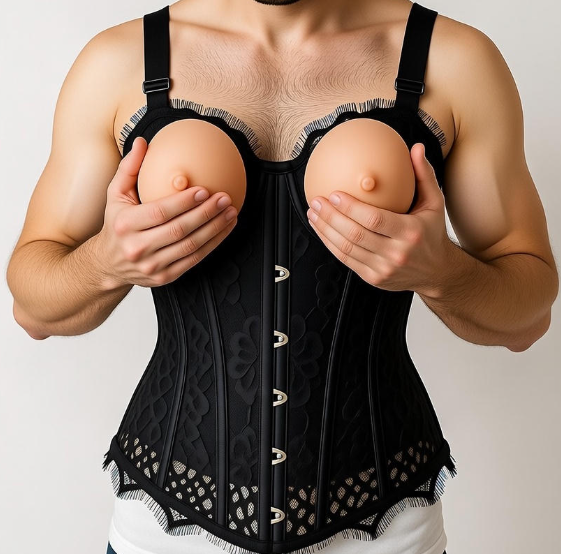 For decades, crossdressers have experimented with countless ways to create the illusion of a feminine chest. From crumpled stockings and foam pads to improvised rice bags, the early days of breast enhancement were filled with clever improvisation but lacked realism. They offered shape but not substance — a curve that fooled the mirror only from a distance. Everything changed with the arrival of medical-grade silicone, a material that brought softness, movement, and warmth that finally mirrored real feminine anatomy.
Today, silicone breast forms are not just accessories — they’re an essential foundation of transformation. They have evolved into a sophisticated blend of science, art, and identity affirmation, allowing wearers to experience the look and feel of womanhood with confidence and authenticity.
This article explores the evolution of breast forms, the technology behind modern silicone designs, and how to choose, wear, and care for them effectively. Whether someone is a lifelong crossdresser, new to gender exploration, or simply curious about body presentation, understanding these innovations can open doors to comfort, realism, and empowerment.
From Foam to Flesh: The Evolution of Crossdressing Enhancements
Before silicone, creating a convincing feminine silhouette was largely an act of creativity and patience. Crossdressers made do with what they had: soft fabrics, cotton stuffing, or even birdseed sealed in pantyhose. These early DIY methods worked under clothing, but they fell short in realism. They lacked the lifelike weight, jiggle, and tactile softness of natural breasts.
Foam pads — the next logical step — provided a smoother shape but still felt artificial. They were light and easy to wear, yet remained cold to the touch and rigid in movement. The foam absorbed sweat, compressed over time, and flattened under tight clothing. Worse, they created a sense of disconnect: no matter how visually convincing, they didn’t feel like part of the body.
In the 1990s and early 2000s, breakthroughs in prosthetic technology for mastectomy patients changed everything. Manufacturers began crafting silicone forms that not only mimicked the appearance of natural breasts but also replicated their behavior: their weight distribution, gentle bounce, and temperature responsiveness. Crossdressers quickly discovered these innovations and adopted them into their wardrobes, finding that they provided both realism and affirmation — an emotional alignment between body and identity.
The Science of Realism: How Silicone Changed Everything
Silicone is a remarkable material. It’s flexible yet resilient, soft yet durable, and — most importantly — thermally conductive. That means it absorbs and transmits body heat, allowing breast forms to gradually warm up until they’re nearly indistinguishable from real skin.
Modern silicone breast forms use medical-grade elastomers — the same materials used for prosthetics, reconstructive surgery implants, and even cinematic special effects. These silicones are formulated to mimic the viscosity and elasticity of human fat and skin tissue. Some designs include layered constructions, where a firmer “muscle” base supports a softer outer layer, creating the same gentle give and resistance that natural breasts have.
When worn against the chest, they respond dynamically to motion. They sway, compress, and settle naturally, whether someone is walking, bending, or dancing. For many crossdressers, this lifelike movement transforms the experience from dressing up to embodying femininity. The sensation of motion — feeling them move with the body — reinforces authenticity in a profoundly personal way.
Even small innovations have made big differences. For instance, skin-textured outer layers now replicate the subtle grain and elasticity of human skin, complete with faint matte finishes to prevent unnatural shine under lighting. Many premium models also include realistic areolas and nipples — soft, contoured, and tinted with lifelike coloration — so convincing that they can be worn under sheer lingerie or swimwear without betraying their secret.
Shapes and Styles: Finding the Perfect Match
Breast forms come in a variety of shapes, each designed to complement different body types, clothing styles, and presentation goals. Choosing the right shape can dramatically affect how natural the overall silhouette appears.
Teardrop (Anatomical) Shapes – Wider at the base and tapering at the top teardrop shape forms — create a subtle, sloping contour that closely resembles the natural fall of real breasts. They’re ideal for a balanced, everyday look under casual tops or blouses. Their vertical orientation allows them to sit comfortably against the chest wall, blending seamlessly with the upper torso.
Oval or Triangle Forms – These versatile designs are often used for fuller coverage or when a rounded, youthful look is desired. They’re excellent for wearing with push-up bras, corsets, or lingerie. Triangular forms also fit nicely into pocket bras and camisoles, offering flexibility and comfort without adhesives.
Full-Chest or Plate-Style Forms – Full-coverage forms — sometimes called breastplates or chest plates — extend across the entire chest, creating a smooth, continuous surface that merges naturally with the neckline and shoulders. These are ideal for low-cut tops, strapless dresses, or cosplay transformations, where a seamless presentation is key. Many full-chest models are cast in ultra-thin silicone and feature lifelike clavicle and collarbone details for maximum realism.
Custom and Partial Forms – Some brands now offer custom-sculpted forms tailored to individual chest contours or partial enhancers for those who want just a subtle boost. Partial forms are great for layering under existing tissue or enhancing cleavage without full volume replacement.
The key to realism lies in proportion. A form that complements the wearer’s frame, shoulder width, and torso shape will always appear more natural than one that’s simply large. It’s tempting to go big — but balance and believability usually create greater visual impact.
Attachment and Adhesion: Becoming One with the Body
One of the biggest leaps in realism has been the ability to attach breast forms directly to the skin. Adhesive systems — both integrated and external — allow forms to move in sync with the body, eliminating visible gaps or shifting beneath clothing.
Adhesive-Backed Forms – These come pre-coated with a medical-grade adhesive surface that bonds gently to the skin. They can be worn for hours without irritation, yet removed easily with warm water or a mild adhesive remover. Once attached, the forms sit flush and move as naturally as real tissue — rising and falling with breath, hugging the chest during motion. This creates the most convincing illusion, especially under low-cut tops, lingerie, or swimsuits where bra straps would otherwise be visible.
Non-Adhesive or Pocket Forms – For convenience or short-term wear, non-adhesive forms fit inside specialized bras or camisoles with internal pockets. They’re easier to don and remove but can shift slightly during active movement. Many crossdressers start here before experimenting with adhesive attachment later on.
Hybrid Options – Some premium brands offer hybrid systems — lightly tacky surfaces that cling naturally without glue, supported by bra pressure. These strike a balance between realism and practicality, making them ideal for extended sessions or public outings where comfort and confidence are both priorities.
Weight, Feel, and Comfort: Choosing the Right Material Core
Not all silicone forms are identical beneath the surface. Manufacturers use varying densities and fills to achieve different effects, from heavy, full-bodied realism to lightweight comfort for long wear.
Solid Silicone – Traditional forms use solid silicone throughout, offering maximum realism in weight and bounce. They warm naturally and provide a reassuring sense of presence, which many crossdressers find emotionally grounding. However, their density can make them heavier and warmer during extended wear.
Gel-Filled Silicone – These use a soft gel core surrounded by a thin silicone shell, producing a gentle jiggle and softer drape. They’re lighter than solid forms and tend to mold slightly to the chest, improving comfort and realism in motion.
Hollow-Core or Lightweight Silicone – For longer wear or warmer climates, hollow-core designs reduce overall weight while maintaining external realism. These breathe better, flex naturally, and minimize fatigue, making them perfect for full-day presentation or travel.
Finding the right balance depends on personal priorities. Some wearers prefer the sensual weight of solid forms; others value comfort above all. Trying different densities helps determine what feels most natural — both physically and emotionally.
Skin Tone and Texture: Matching the Real You
A vital part of realism lies in color matching. Modern breast forms now come in dozens of skin tones, from porcelain and olive to rich mocha and deep espresso. This inclusivity helps every wearer find a match that blends seamlessly with their complexion, especially when the neckline or cleavage is visible.
Advanced finishing techniques add micro-textures, freckles, or slight tonal variations to mimic the subtle imperfections of real skin. The result is a surface that reflects light naturally and passes the visual “touch test” even under scrutiny.
For those who use makeup or body foundation, silicone accepts light cosmetic blending — though it’s best to test products first, as oil-based formulas can degrade adhesives or finishes. Many modern forms also feature powder-matte surfaces that prevent unwanted shine under bright lighting, ideal for photos or nights out.
Nipples and Areolas: Details that Define Realism
Few details elevate authenticity like realistic nipples. Early forms featured flat or painted designs, but today’s models incorporate 3D molded areolas with natural gradients, gentle protrusions, and soft pliability.
Some high-end breastplates even offer interchangeable nipple options, allowing users to swap between subtle or prominent styles depending on their outfit or mood. Others include built-in tinting that’s water-resistant, ensuring color retention after cleaning.
For presentation under sheer tops or lingerie, the subtle outline of realistic nipples adds a powerful touch of femininity. Yet for discretion, smooth-front covers or removable nipple shields can provide a seamless, modest appearance.
Sizing and Proportion: Creating a Balanced Silhouette
Choosing the right size is both art and science. The goal isn’t just “bigger is better” — it’s achieving natural proportions that complements height, shoulder width, and torso frame.
A tall, broad-shouldered person might look balanced with a D-cup, while a smaller frame may appear more authentic with a B or C. Many brands offer detailed size charts correlating chest circumference and height to cup size, helping wearers select forms that harmonize with their overall shape.
When possible, it’s worth investing time in experimentation. Trying different cup sizes with various outfits — from casual T-shirts to formal dresses — reveals how proportion affects overall presentation. Realism comes not only from the form itself, but from how well it integrates into the wearer’s visual and physical expression of femininity.
Practical Considerations for Everyday Wear – Realistic forms are designed to integrate seamlessly into daily life. But maximizing comfort, safety, and longevity requires mindful care and practical know-how.
Breathing and Temperature – Silicone retains warmth but doesn’t breathe like skin. During long sessions or warm weather, lightweight or ventilated forms help prevent overheating. Some wearers apply a light dusting of body powder to reduce friction and moisture buildup.
Clothing Compatibility – Adhesive forms excel under low-cut or strapless garments, while pocket-bra models pair better with everyday bras. For tight tops, teardrop shapes and thin-edged designs minimize visible outlines.
Long-Wear Comfort – If planning to wear forms all day, lighter models or hollow-core silicone provide superior comfort. For extended adhesive wear, skin-safe barriers or wipes help protect the chest from irritation.
Storage and Maintenance – Forms should be stored flat in their molded trays or soft pouches, away from sunlight and heat. Cleaning is simple: warm water, mild soap, and gentle pat drying. Avoid alcohol or oil-based cleansers, which can degrade silicone surfaces or adhesives.
Durability – High-quality forms can last many years with care. Avoid puncturing the surface or compressing them for long periods, and always handle by the edges rather than the nipple area.
Emotional Resonance: More Than Just Appearance
For many crossdressers, silicone breast forms represent more than physical enhancement — they’re a psychological bridge between self-image and outer presentation. The first moment of seeing or feeling them attached to one’s body can be transformative.
It’s not merely about aesthetics; it’s about embodiment. The weight resting on the chest, the gentle movement during a step, the natural contour beneath clothing — all contribute to an inner sense of completeness. Many describe it as finally seeing the reflection that aligns with how they’ve always felt inside.
In this way, breast forms serve a dual role: physical realism and emotional affirmation. They help bridge the gap between identity and expression, allowing the wearer to inhabit their femininity rather than just emulate it.
As technology refines further, manufacturers increasingly recognize this emotional dimension. Modern marketing acknowledges that these are not just prosthetics or costume pieces — they’re instruments of self-realization. That recognition alone marks a profound shift in how society perceives gender expression and the artistry of transformation.
The Future of Feminine Form: Where Innovation Is Heading
Advances in materials science and wearable technology suggest that the next generation of breast forms will be even more lifelike. Early prototypes already integrate temperature-regulating gels, micro-sensor heating elements, and shape-adaptive silicone matrices that respond to motion for hyper-realistic behavior.
We may see developments in 3D body scanning and printing, allowing for custom-fit forms sculpted to an individual’s chest for seamless blending. Imagine innovation inspired by film industry prosthetics.
Longer term, bio-compatible materials may even allow semi-permanent adhesion or partial integration, further blurring the line between prosthetic and flesh. For crossdressers, this continued evolution means greater freedom, comfort, and realism — and a future where every curve, texture, and movement feels authentically one’s own.
Practical Buying Guide: What to Look for in a Quality Pair
For those investing in silicone breast forms, quality and fit make all the difference. Here’s a concise checklist for choosing wisely:
- Material: Look for medical-grade silicone or platinum-cured silicone — hypoallergenic, odorless, and durable.
- Shape: Choose teardrop for realism, triangle for fullness, or full-chest plates for seamless presentation.
- Weight: Consider gel-filled or hollow designs for comfort during long wear.
- Attachment: Decide between adhesive, pocket-bra, or hybrid systems depending on your clothing and routine.
- Skin Tone: Match your natural complexion for realistic blending.
- Finish: Opt for matte, skin-textured surfaces to avoid unnatural shine.
- Nipples: Determine whether you want realistic, interchangeable, or smooth options.
- Sizing: Balance cup size with body frame for believable proportion.
- Support Garments: Use bras designed for prosthetic or enhancement wear; they cradle forms securely and enhance shape.
- Care: Follow manufacturer cleaning instructions to preserve texture and adhesive strength.
Confidence Through Realism
Ultimately, silicone breast forms have done more than perfect the illusion of femininity — they’ve improved access to authentic self-expression. The combination of advanced materials and thoughtful design now allows anyone, regardless of anatomy, to experience the natural grace and sensation of a feminine form.
For crossdressers, that’s more than cosmetic. It’s confidence. It’s validation. It’s the ability to move through the world — or simply through one’s reflection — feeling complete.
As one slips into a favorite top, feels the natural weight and sway of silicone forms settle into place, and catches a glimpse in the mirror, there’s often a quiet realization: this isn’t just about imitation. It’s about integration.
Silicone breast forms have become the foundation of realism, but also of self-understanding — a tangible way to connect inner identity with outer expression. And in that union of form and feeling lies something more powerful than technology: authenticity.
From humble foam pads to today’s hyper-realistic silicone marvels, breast forms have undergone an astonishing evolution. What once was a crude approximation has become a triumph of material science and empathy — giving crossdressers the ability to express who they truly are with grace and precision.
Each pair represents a personal story: of curiosity, courage, and the desire to see oneself reflected truthfully. Whether worn for a night out, a photo shoot, or simply quiet affirmation at home, silicone breast forms have transcended their original purpose.
They’re not merely accessories; they’re extensions of identity. And in the modern era of gender expression, they remain — fittingly — the very foundation of realism.
Comments
From Rice Bags to Silicone – The Material Sciences that have Revolutionized Feminine Breast Simulation for Crossdressers — No Comments
HTML tags allowed in your comment: <a href="" title=""> <abbr title=""> <acronym title=""> <b> <blockquote cite=""> <cite> <code> <del datetime=""> <em> <i> <q cite=""> <s> <strike> <strong>