
Gender-Affirming Fashion and Clothing for the Modern Crossdresser
by Jenn der Bentson
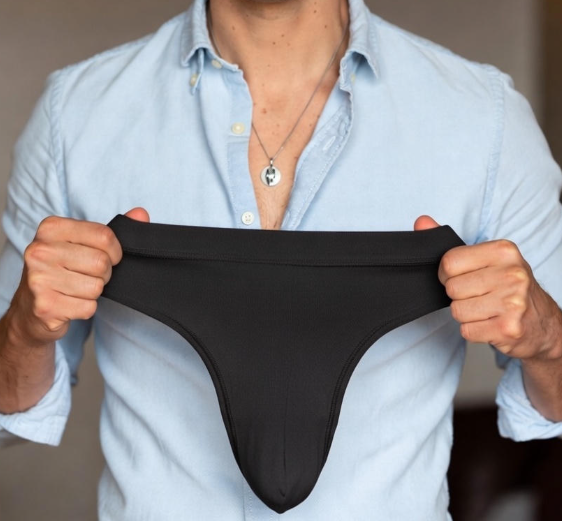 For decades, the act of crossdressing came with its own unique set of challenges, and one of the most persistent obstacles was clothing. Traditional retail fashion has historically catered to a binary system: men’s and women’s lines, each designed around a narrow set of assumptions about body shape, proportion, and sizing. A man wishing to present as female often had to sift through women’s clothing in search of pieces that might fit his broader shoulders, longer torso, or more angular frame. Tailoring became a near-necessary ritual, a workaround that added expense, time, and uncertainty to what should have been a joyful act of self-expression. In many ways, clothing itself reinforced the boundaries of gender, subtly dictating what bodies “belonged” in which garments.
The landscape of fashion, however, is changing. In recent years, designers, brands, and niche clothing providers have begun to embrace inclusivity in ways that directly benefit male-to-female crossdressers. What was once an act of compromise—trying to fit into garments designed for bodies fundamentally different from one’s own—has begun to shift toward empowerment. A growing segment of fashion technology and design now prioritizes gender-affirming principles, creating clothing that acknowledges diverse body shapes while maintaining style, elegance, and comfort.
The Rise of Niche Crossdressing Clothing Providers
The movement toward inclusive fashion has a visible front in mainstream brands expanding size ranges and adopting gender-neutral lines. Yet even more transformative is the work being done by niche crossdressing clothing providers. Unlike general fashion retailers, these specialized brands have direct insight into the unique needs of crossdressers. They recognize that a successful garment is not simply a smaller version of men’s clothing or a slightly larger women’s piece; it is a garment designed with the subtleties of body proportion in mind.
Consider the typical male-to-female crossdresser. Shoulder width often exceeds what is common in standard women’s sizing, torsos may be longer, and hips narrower. A traditional women’s blouse or dress can easily bunch, gape, or ride uncomfortably, undermining the intended feminine silhouette. Niche providers have responded by rethinking measurements and cut patterns, designing pieces that accommodate these differences while still draping gracefully. The result is clothing that eliminates the need for extensive alterations, letting crossdressers achieve polished, well-fitted looks straight off the rack.
Garment Design That Better Fits the Body
One of the key innovations lies in the meticulous attention to proportion. Dresses, blouses, and skirts are no longer scaled up versions of standard women’s clothing; they are reimagined with broader shoulders, slightly longer sleeves, adjusted waistlines, and carefully contoured hips. Designers often employ subtle shaping techniques—strategic darts, paneling, and seam placements—to create the illusion of a naturally feminine figure without forcing bodies into uncomfortable constraints.
For crossdressers, this is transformative. A dress can now fall exactly as intended, a blouse can follow the line of the torso without excessive gaping, and skirts can flare in proportion with the natural movement of the hips. This level of thoughtfulness removes one of the most stressful aspects of dressing: the uncertainty that comes with trying to force one’s body to conform to garments that were never designed for it.
Fabric Innovations and Adaptive Fit
Design improvements alone, however, would not be sufficient without advancements in fabric technology. Stretch-blend textiles, memory fibers, and 3D knit constructions have introduced a level of adaptability previously unseen in everyday clothing. Stretch-blend fabrics, often combining natural fibers with elastane or spandex, allow garments to expand and contract in key areas, conforming to the body without losing shape. Memory fibers go a step further, literally shaping fabric in ways that accommodate curves and angles while offering a smooth, seamless appearance.
These innovations are especially beneficial for crossdressers who may experience minor asymmetries or unique body shapes. The adaptive nature of modern fabrics allows garments to fit more naturally across shoulders, torso, and hip proportions, producing a flattering silhouette without requiring the intervention of a professional tailor. It’s a technical solution that directly addresses a longstanding practical barrier, transforming the act of dressing from a compromise into an opportunity for self-expression.
Lingerie and Layering Reimagined
Inclusive design is not limited to outerwear. Lingerie, a cornerstone of gender-affirming fashion, has evolved to meet the nuanced needs of crossdressers. Traditional bras and undergarments were designed with the assumption of a naturally developed bust, often leaving male-to-female crossdressers with limited options. Modern lingerie brands now offer cup sizes, band widths, and contouring specifically suited to flatter chests or wider ribcages, bridging the gap between comfort, function, and visual authenticity.
The impact of this innovation extends beyond the garment itself. Properly proportioned lingerie supports layering and overall presentation, ensuring that tops, dresses, and jackets drape correctly and maintain a natural flow. For crossdressers, it’s a subtle but powerful enhancement, enabling a presentation that is both aesthetically pleasing and physically comfortable.
Technology Meets Fashion: Virtual Fitting Tools
Perhaps the most remarkable recent shift includes potential integration of technology into the shopping experience. Online retailers catering to crossdressers increasingly provide virtual fitting tools, allowing customers to simulate how garments will fit before making a purchase. By uploading precise body dimensions, shoppers can see realistic projections of how dresses, skirts, blouses, and lingerie will conform to their frames.
These tools offer an additional layer of empowerment: privacy. For many crossdressers, the act of purchasing feminine attire can carry social or emotional complexity. Virtual fitting tools allow individuals to explore options, experiment with silhouettes, and select garments that best suit their needs—all without public exposure. This digital innovation, when combined with inclusive sizing and fabric adaptability, may create an entirely new paradigm for crossdressing: one in which uncertainty and compromise are replaced with choice and self-determination.
Breaking Down the Barriers
The cumulative effect of these innovations—specialized tailoring, adaptive fabrics, proportion-conscious design, gender-affirming lingerie, and virtual fittings—is nothing short of transformative. For decades, the crossdresser’s journey in fashion was defined by limitations, improvisation, and compromise. Today, the industry is shifting, offering solutions that recognize the diversity of bodies and the legitimacy of self-expression.
Clothing no longer needs to be an obstacle to authenticity. Instead, it has become a tool for empowerment. Dresses, blouses, skirts, and lingerie can now accommodate male-to-female proportions without sacrificing style or comfort. Fabrics respond to natural contours. Retail experiences can be private, precise, and encouraging. What was once a domain of frustration—finding garments that fit—has evolved into an arena of choice, creativity, and affirmation.
The Cultural Implications of Inclusive Design
The impact of gender-affirming fashion extends beyond individual utility. It represents a cultural shift toward inclusivity and the recognition of diverse identities. When clothing brands actively engage with the specific needs of crossdressers, they challenge traditional notions of gender and broaden society’s understanding of what is normal, acceptable, and beautiful.
This inclusivity also has psychological and emotional ramifications. Wearing clothing that fits correctly and feels natural can dramatically improve confidence, self-perception, and social comfort. For crossdressers, each garment becomes a bridge between personal identity and public expression, a physical manifestation of self-affirmation. The industry’s embrace of adaptive design validates these experiences, making fashion a medium through which authenticity is both supported and celebrated.
Beyond Niche: Mainstream Adoption
While niche providers have led the way, the principles of gender-affirming fashion are beginning to influence mainstream labels as well. Large retailers increasingly incorporate stretch fabrics, adaptive sizing, and gender-neutral lines, acknowledging the broader demand for clothing that defies traditional binaries. What was once experimental or specialized is now becoming a standard consideration in design thinking, signaling a shift in both commerce and culture.
For crossdressers, this shift has profound implications. Options are more abundant, visibility is higher, and the stigma associated with finding well-fitting clothing is reduced. Mainstream adoption also drives innovation, as competition encourages further exploration of fabrics, patterns, and sizing algorithms. The net result is a self-reinforcing cycle: increased inclusion inspires technological advancement, which in turn enables more authentic expression, which then informs further inclusive design.
Looking Forward: The Future of Gender-Affirming Fashion
The evolution of gender-affirming fashion is ongoing, and the horizon is bright. Emerging technologies such as AI-driven pattern generation, 3D body scanning, and sustainable adaptive textiles promise even more personalized and environmentally conscious options. Imagine a future where garments are printed on demand based on precise measurements, where fabrics adjust dynamically to body temperature and movement, and where lingerie is fully customizable for both comfort and aesthetic effect.
These developments have the potential to redefine not just crossdressing, but fashion itself. By prioritizing inclusivity, comfort, and realism, the industry signals that clothing can serve the individual, rather than forcing the individual to serve the clothing. For crossdressers, this represents not just convenience, but liberation: a world where dressing en femme is supported, celebrated, and technologically empowered.
The journey from rigid, binary sizing to fully gender-affirming fashion represents a profound transformation in how clothing interacts with identity. Where once male-to-female crossdressers had to improvise, tailor, and compromise, today they can access garments designed specifically for their bodies. Niche providers and mainstream retailers alike have recognized that inclusivity is not merely a trend, but a necessity—one that enhances authenticity, comfort, and personal expression.
Innovations in design, fabric, lingerie, and technology converge to produce a landscape in which crossdressers can shop with confidence, privacy, and joy. Dresses, blouses, skirts, and undergarments now accommodate broader shoulders, longer torsos, and narrower hips while maintaining elegance. Adaptive fabrics and 3D knits ensure garments move naturally with the body, while virtual fitting tools allow precise selection without compromising discretion.
In short, what was once a challenge—finding clothing that fits outside traditional molds—has become an opportunity. Fashion, long a gatekeeper of gender norms, is increasingly becoming a facilitator of empowerment. For crossdressers, this evolution is more than convenience; it is affirmation, choice, and a tangible step toward living authentically.
As the industry continues to innovate, the message is clear: clothing no longer needs to constrain identity. It can celebrate it. And in doing so, fashion finally lives up to one of its most powerful potentials—helping every individual feel seen, understood, and beautifully expressed.
Comments
Gender-Affirming Fashion and Clothing for the Modern Crossdresser — No Comments
HTML tags allowed in your comment: <a href="" title=""> <abbr title=""> <acronym title=""> <b> <blockquote cite=""> <cite> <code> <del datetime=""> <em> <i> <q cite=""> <s> <strike> <strong>