
Wanting Normalcy While Being Different: Why Straight Crossdressers Often Just Want Peace
By Jenn der Bentson
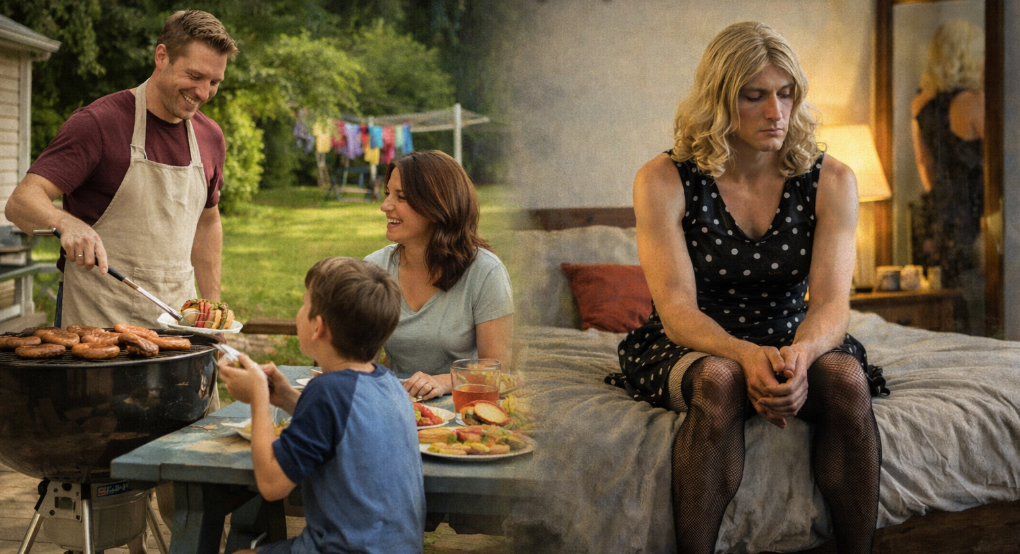 In a world that thrives on labels, identities, and definitions, some of the quietest struggles go unnoticed. Among them is the experience of heterosexual men who cross-dress—not as a statement, not as a public declaration, and certainly not as a performance designed for validation—but as a deeply personal, often private way of expressing an integral part of themselves. These men, sometimes called “straight crossdressers,” navigate an intricate landscape of desire, self-expression, and social expectation, often yearning not for drama or attention but for a simple thing: peace.
The Invisible Layer of Identity
Many people assume that cross-dressing is inherently about sexuality. Media portrayals—ranging from comedy sketches to sensationalized stories—often conflate cross-dressing with homosexuality, fetishism, or flamboyant exhibitionism. Yet for many heterosexual men, these assumptions couldn’t be further from the truth. The act of wearing traditionally feminine clothing does not automatically redefine their sexual orientation. Instead, it offers a channel to express a part of themselves that society has long told them is “wrong” or “unnatural.”
For these men, cross-dressing is often less about shocking the world and more about quiet, personal alignment. It can be as simple as slipping into a soft blouse or choosing the right shade of nail polish—small acts that reconnect them with their sense of self. It is a private joy, often experienced alone in the safety of a bedroom, bathroom, or behind closed doors, yet it is no less real or vital than any other form of self-expression.
The Desire for Normalcy
At first glance, “normalcy” and cross-dressing may seem contradictory. After all, society often regards deviation from gender norms as anything but normal. However, for many straight crossdressers, the desire for normalcy is not about conforming or hiding; it is about living without fear of judgment while retaining the relationships, responsibilities, and routines that define their lives.
Many of these men are husbands, fathers, and professionals. They are partners, coworkers, and community members. Their goal is not to dismantle traditional structures but to exist within them authentically. They want to be themselves without sacrificing the love and respect they have worked for over decades. They want to hug their children without worry, maintain professional credibility, and continue participating in the life they have built—all while exploring a part of their identity that brings them quiet, profound satisfaction.
This desire for normalcy is often misunderstood. The media and social narratives frequently depict cross-dressers as rebels or provocateurs, yet the reality is frequently the opposite. Many straight crossdressers are cautious, introspective, and highly aware of social dynamics. They cross-dress not to make waves but to make sense of themselves—a subtle act of survival in a world that can be harshly unforgiving toward those who diverge from gender norms.
The Weight of Secrecy
Secrecy is both a shield and a burden. Keeping a part of oneself hidden is a deeply human experience, yet it comes with emotional costs. Many heterosexual crossdressers carry dual lives: a public persona that aligns with societal expectations and a private persona that reflects their truest feelings. Maintaining this balance requires vigilance, careful planning, and emotional resilience.
The consequences of discovery—whether in a professional, social, or familial context—can be severe. Rejection, ridicule, or alienation are real risks. Even in seemingly progressive communities, there is a persistent undercurrent of misunderstanding. These men often fear that revealing their cross-dressing could destabilize the relationships they value most. The internal tension can be exhausting: the desire for expression wrestling against the fear of loss.
Yet, paradoxically, secrecy also amplifies the longing for normalcy. The more a crossdresser must hide, the more precious moments of private expression become. Every stolen hour in a mirror, every carefully chosen outfit tucked away in a drawer, is a quiet act of reclaiming selfhood. It is an assertion that their identity—though different—is still valid, even if society doesn’t recognize it.
The Intersection of Love and Fear
Love is central to the experience of many straight crossdressers, particularly those who are in committed relationships. For some, revealing their cross-dressing to a spouse or partner is an act filled with vulnerability. They want acceptance but fear rejection. The stakes are high: marriages, family harmony, and emotional intimacy hang in the balance.
For those who do come out to loved ones, reactions vary widely. Some partners respond with understanding and even curiosity, creating a safe space for self-expression within the relationship. Others may struggle to reconcile their partner’s cross-dressing with their preconceived notions of masculinity, gender roles, or sexual orientation. The tension between authenticity and relationship stability is a delicate negotiation, often requiring patience, empathy, and ongoing communication.
Even for men who keep their cross-dressing private, the fear of judgment is constant. They worry about gossip, social stigma, and the impact on their children. Yet, despite the fear, the desire to live authentically remains. It is not a radical desire; it is a human one: the need to be seen, to be known, and to be allowed to exist in one’s entirety without shame.
Cross-Dressing as a Form of Self-Care
For many heterosexual men, cross-dressing is less about identity politics and more about personal well-being. It can be a form of emotional and psychological self-care. The tactile pleasure of fabric against skin, the confidence that comes from feeling aligned with one’s internal sense of self, and the quiet joy of private aesthetic expression all contribute to a healthier, more balanced mental state.
This private practice can also act as a release valve for stress, societal pressure, and emotional repression. In a world that often equates masculinity with stoicism and emotional restraint, cross-dressing allows men to reconnect with sensitivity, beauty, and nuance in a deeply personal way. It is a reminder that identity is multifaceted, and that self-care does not always look conventional or conformist.
Challenging Misconceptions
Society’s assumptions about cross-dressing can create additional layers of difficulty for heterosexual men. Misconceptions often include:
- It’s about sexuality. Many believe cross-dressing is inherently linked to sexual attraction, but for many men, it is purely about gender expression and personal fulfillment.
- It’s attention-seeking. Straight crossdressers often go to great lengths to remain private; publicity is frequently avoided, not sought.
- It undermines masculinity. Cultural scripts dictate that masculinity and femininity are mutually exclusive, yet cross-dressing challenges that binary without threatening it. Many men remain committed partners, responsible fathers, and accomplished professionals.
- It’s a “phase” or “weird hobby.” For countless men, cross-dressing is not temporary but a lifelong thread of identity, quietly woven into the fabric of their lives.
By dispelling these myths, we can begin to recognize the quiet courage that crossdressers exhibit daily. They navigate complex social landscapes, balancing authenticity with the desire to preserve relationships and respect. Their goal is not upheaval but coexistence—a nuanced dance between self and society.
Finding Community in Privacy
While secrecy is often a necessity, many heterosexual crossdressers seek connection in discreet ways. Online forums, private social groups, and carefully curated friendships can provide validation and support without exposing them to risk. These spaces allow men to share experiences, exchange tips on fashion or makeup, and process emotions with others who understand the unique challenges of living authentically while remaining socially integrated.
Even when community is virtual or behind closed doors, it can have a profound impact. Feeling understood—even if only by a small, carefully selected group—reduces isolation and fosters resilience. It reinforces the notion that one can be different without being alone, and that private identity can coexist with public responsibilities.
Embracing the Complexity of Identity
The experience of heterosexual crossdressers highlights the complexity of identity itself. They inhabit spaces where gender norms, social expectations, and personal desires intersect in intricate and sometimes conflicting ways. Their lives are neither simple nor neatly categorized. Yet in their complexity lies a powerful lesson: the right to exist authentically does not require dramatic gestures, public declarations, or social disruption. It requires only recognition, empathy, and, most importantly, space.
Cross-dressing is not inherently radical. For many men, it is an act of quiet affirmation, a ritual that says, “I exist fully, even if only in these moments, and I deserve to do so without fear or shame.” Their courage is not always visible, but it is profound—a testament to the resilience of human authenticity.
Why Society Should Listen
Understanding straight crossdressers is about more than compassion; it is about challenging rigid social scripts and expanding what it means to live a fulfilled life. By acknowledging their struggles, society can foster an environment where people can explore identity without fear of ostracism. Small shifts—like normalizing private expressions of femininity among men or reframing assumptions about sexuality—can create immense relief for those whose lives often unfold in quiet, private courage.
Ultimately, the story of heterosexual crossdressers is one of humanity seeking balance. It is about negotiating the tension between individuality and community, between private joy and public expectation. It is about men who, in their own unassuming way, are asking for nothing more than permission to be themselves.
Toward a Culture of Quiet Acceptance
Change does not always roar. Sometimes it whispers through small acts of empathy and understanding. Straight crossdressers remind us that identity can be fluid, private, and non-disruptive while still being meaningful. They ask for no revolution—only acceptance, respect, and the space to live authentically.
For those navigating these experiences, the path can be fraught with fear, secrecy, and negotiation. But there is also a quiet power in living authentically, even in hidden ways. Every choice, every moment of self-expression, is a small reclamation of humanity and dignity.
In acknowledging the lives of straight crossdressers, society can take a step closer to embracing difference without judgment. We can begin to understand that wanting normalcy while being different is not a contradiction—it is, in fact, profoundly human.
For heterosexual men who cross-dress, the journey is rarely about spectacle or rebellion. It is about the simple, profound desire to exist fully and authentically while maintaining the love, respect, and stability that shape their lives. They do not ask for fame, attention, or radical change. They seek what so many of us crave: a space to be themselves without fear, a life in which difference does not mean danger, and moments of quiet peace where identity and authenticity coexist.
Their story is a reminder that sometimes courage is measured not by public acts of defiance but by the quiet perseverance of living truthfully, even when the world might not understand. In the end, wanting normalcy while being different is not a contradiction—it is a delicate, beautiful expression of humanity at its most authentic.
Comments
Wanting Normalcy While Being Different: Why Straight Crossdressers Often Just Want Peace — No Comments
HTML tags allowed in your comment: <a href="" title=""> <abbr title=""> <acronym title=""> <b> <blockquote cite=""> <cite> <code> <del datetime=""> <em> <i> <q cite=""> <s> <strike> <strong>