
Wig Density Options – A Guide for Crossdressers
By Jenn der Bentson
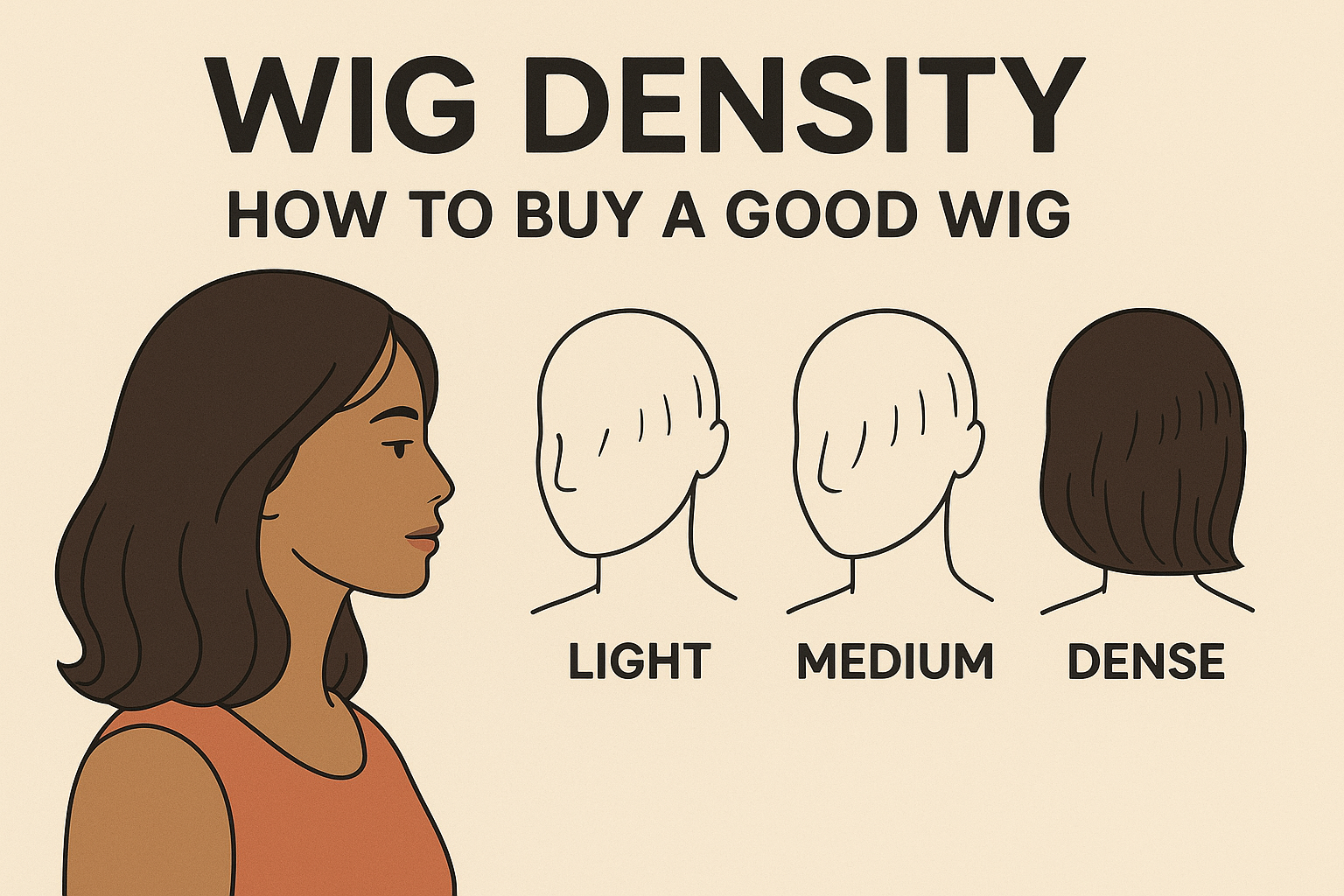 When stepping into the world of wigs, one of the most overlooked—but crucial—factors is hair density. Style, length, and color usually steal the spotlight, but density can make or break how natural and flattering your wig appears. The wrong density can leave a wig looking thin and lifeless, or overly thick and artificial. For crossdressers especially, choosing the right density helps strike the delicate balance between achieving feminine fullness and keeping a look believable in real-world settings.
This guide takes you through everything you need to know about wig density: what it is, the different options available, how density affects realism and styling, and what considerations matter most when crossdressing. Whether you’re brand new to wigs or refining your look, density is a powerful tool for achieving authenticity, confidence, and glamour.
What Is Wig Density?
In simple terms, wig density refers to how much hair is used to construct the wig. It’s measured as a percentage that reflects thickness compared to a standard “average” head of natural hair. A wig with lower density will have fewer strands sewn in, resulting in a lighter, flatter look, while higher-density wigs are fuller, heavier, and often more dramatic.
Density isn’t just about visual volume; it also influences:
- Realism: Does the hair look natural, or does it scream “wig”?
- Comfort: Does it feel breathable and light, or heavy and warm?
- Styling versatility: Can you curl, part, or pull it into updos easily?
- Face-framing: Does it soften features, or overwhelm them?
Understanding density gives you control over how the wig works with your face, body type, and presentation.
The Standard Density Ranges
Wigs are generally sold in several common density levels. These categories serve as useful benchmarks:
- Normal / Light Density (~100%)
- 125% Density
- 150% Density
- 200% Density
Each density has pros, cons, and best-use scenarios. Let’s break them down.
Normal or Light Density (~100%)
This level mimics the natural thickness of hair for most women. It’s subtle, understated, and works beautifully for casual, everyday wear.
Pros:
- Lightweight and breathable, perfect for long-term wear.
- Very natural for shorter wigs or sleek bob styles.
- Minimal effort required for blending or styling.
Cons:
- May look too thin on larger heads or with longer wigs.
- Can lack the volume many crossdressers prefer for balancing facial proportions.
Best For: Those aiming for a very understated, “girl-next-door” look, or anyone who wants comfort above all else.
125% Density
Slightly fuller than natural, 125% provides a healthy and polished look without venturing into glamorously thick territory.
Pros:
- Offers enough fullness to avoid a “flat” look.
- Still lightweight and breathable.
- Works well for both casual and professional settings.
Cons:
- Can still feel a bit sparse for longer lengths.
- Less dramatic than many crossdressers may want when dressing to impress.
Best For: Everyday wear, discreet outings, or beginners seeking a safe, middle-of-the-road option.
150% Density
Arguably the most popular density choice, 150% offers a balance of fullness, realism, and styling potential. It creates a salon-styled look with enough body to frame the face beautifully.
Pros:
- Provides volume without looking “over the top.”
- Excellent for shoulder-length to long wigs.
- Offers styling versatility (waves, curls, or updos).
- Flattering for softening stronger or more angular masculine features.
Cons:
- Slightly heavier than lighter densities.
- May require extra care in hot climates.
Best For: Crossdressers wanting the most natural yet feminine look. Great for both day and evening wear.
200% Density
This is the high-glam option. A 200% wig is thick, full, and dramatic—perfect for creating big, voluminous hairstyles that turn heads.
Pros:
- Maximum fullness and styling options.
- Excellent for glamorous, stage, or nightlife looks.
- Creates powerful face-framing volume.
Cons:
- Heavier and warmer, which can feel uncomfortable over long periods.
- May look less natural for everyday settings.
- Can require extra effort to manage and style.
Best For: Special occasions, photography, or whenever you want to embody high-drama femininity.
Density and Realism: Striking the Balance
For many crossdressers, realism is key. You want to blend into everyday life without the hair looking either too thin or suspiciously thick. Here’s the rule of thumb:
- Under 125% density: Best for subtle, casual looks.
- 150% density: The sweet spot for balancing naturalism and fullness.
- 200% density: Best reserved for evenings, events, or bold expressions.
Think of density as part of your overall presentation toolkit. If your clothing style is understated, a 200% wig may look mismatched. Conversely, if you’re dressing glamorously, a thin 100% wig may feel out of place.
Styling With Different Densities
Density also impacts how you can style your wig:
- Light density wigs (100–125%) excel at sleek, straight looks or shorter cuts like pixies and bobs.
- Medium density wigs (150%) are ideal for layered cuts, waves, and shoulder-to-long lengths that need body.
- High density wigs (200%) are perfect for curls, updos, and hairstyles that demand volume.
If you’re experimenting with different looks, keep in mind that the higher the density, the more options you have for dramatic styling—but also the more effort required.
Seasonal Considerations
Wig density also plays a big role in comfort across different seasons:
- Summer and hot climates: Light-density wigs (100–125%) are cooler and more breathable. A thick 200% wig may quickly become uncomfortable.
- Fall/Winter or cooler climates: Higher-density wigs (150–200%) not only look fuller but also provide a bit of warmth.
Crossdressers who wear wigs frequently often keep multiple densities in their collection to match the weather and occasion.
Density and Face Shape
One of the most powerful aspects of wig density is how it influences face framing. For crossdressers, wigs often play the role of softening harder angles or creating balance with broader features.
- Round faces: Lighter densities can help prevent adding too much width. A sleek 125% wig works beautifully.
- Square or angular faces: 150% or higher adds softness and volume, balancing sharp lines.
- Long faces: Fuller densities (150–200%) help add width and fullness at the sides.
The right density can enhance your femininity just as much as the right hairstyle.
Maintenance and Care
Heavier density wigs require more upkeep. Here’s what to expect:
- 100–125% Density Wigs: Easier to wash, dry, and detangle. Less hair means less effort.
- 150% Density Wigs: Moderate upkeep. You’ll need to brush and style regularly, but the balance is manageable.
- 200% Density Wigs: High-maintenance. More hair means more tangles, longer drying times, and more effort styling.
If you’re new to wigs, starting with a lower-density option can help you learn proper care without feeling overwhelmed.
Blending and Wearing Tips for Crossdressers
No matter the density, blending your wig into your overall look is crucial. Here are a few tips tailored for crossdressers:
- Match density with purpose: Keep a lighter wig for casual errands, and a fuller wig for evenings out.
- Pair with the right cap: Lace front wigs with 150% density often provide the best combination of realism and security.
- Hide the edge when needed: If blending the lace feels challenging, a full cap wig with bangs is an easy solution.
- Balance proportions: If you’re broad-shouldered, higher density helps balance the silhouette by drawing the eye upward.
- Practice styling: Even a 125% wig can look voluminous if curled properly. Don’t underestimate the power of tools and products.
Common Mistakes in Choosing Wig Density
It’s easy to misjudge density when buying your first wigs. Here are pitfalls to avoid:
- Going too light: A 100% density wig may look natural on petite women, but on a taller or broader crossdresser it can appear sparse.
- Going too heavy: Jumping straight to 200% density can feel overwhelming and unnatural if you’re not used to it.
- Not considering lifestyle: Daily wearers may struggle with the upkeep of higher densities.
- Ignoring climate: A dense wig in summer heat can become unbearable quickly.
Building a Wig Wardrobe
Many seasoned crossdressers don’t stop at one wig—they build a small collection. Having wigs in different densities gives you flexibility for any occasion:
- 100–125% density: Everyday errands, subtle looks, or hot weather.
- 150% density: Your “go-to” wig for most outings. Balanced, versatile, and natural.
- 200% density: Nights out, photography, or moments when you want to stand out.
Over time, you’ll learn which density feels most “you,” but having options allows you to adapt and express yourself freely.
Wig density may not be the first thing you think about when shopping for a wig, but it is one of the most impactful choices you’ll make. The right density enhances realism, boosts comfort, and gives you the power to adapt your look to the occasion.
For crossdressers, it’s often about balance—achieving enough fullness to project feminine beauty while keeping the style believable in everyday contexts. Whether you prefer the understated lightness of 125%, the balanced fullness of 150%, or the bold drama of 200%, density is your ally in crafting a presentation that feels authentic and empowering.
In the end, the best wig is the one that makes you feel most like yourself—confident, radiant, and beautiful. Understanding density simply gives you more tools to make that happen.
Comments
Wig Density Options – A Guide for Crossdressers — No Comments
HTML tags allowed in your comment: <a href="" title=""> <abbr title=""> <acronym title=""> <b> <blockquote cite=""> <cite> <code> <del datetime=""> <em> <i> <q cite=""> <s> <strike> <strong>