
The Hardest Kind of Acceptance for a Crossdresser to Achieve is Self-Acceptance
By Jenn der Bentson
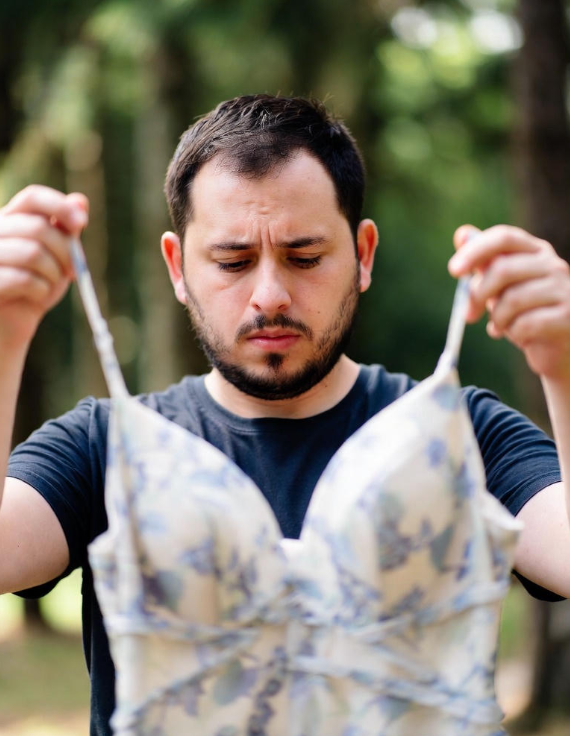 Crossdressing is one of the most personal and vulnerable expressions of self that a man can take on. For many who live with this desire, the first instinct is to wonder how others will react: Will my wife or girlfriend accept this? Will my family disown me? Will my friends laugh at me? What would strangers say if they knew? Those questions often echo louder than anything else. The need for external validation is powerful because rejection hurts—and for crossdressers, rejection often feels tied to their very sense of identity and humanity.
Yet, beneath all those external fears lies a deeper challenge that often goes unspoken: accepting oneself. You can hide from others, but you can’t hide from your own reflection in the mirror or the quiet voice inside your head. And for most crossdressers, the hardest form of acceptance is not winning over a spouse or finding a supportive community—it is the daily work of accepting that their desires are real, valid, and worthy of love.
So let’s explore why self-acceptance is the greatest challenge for crossdressers, how shame and doubt take root, and what steps can help someone move toward embracing themselves fully.
Why Self-Acceptance Is So Difficult
The Cultural Weight of Masculinity
From the moment boys are born, society begins teaching them what it means to be “a man.” Strength, toughness, stoicism, independence—these are praised. Sensitivity, softness, beauty, vulnerability—these are seen as “feminine,” and often ridiculed in boys who display them. Crossdressing flies in the face of these cultural rules. A man in a dress is told he is “less of a man,” “weird,” or “perverted.”
Because of this conditioning, most crossdressers don’t grow up seeing crossdressing as a valid form of expression. Instead, they stumble into it, often with excitement mixed with guilt. A teenage boy who puts on his mother’s blouse may feel a thrill, but quickly hide it, ashamed. That shame doesn’t vanish with age—it burrows into the mind, whispering that what he desires is “wrong.”
Internalized Stigma
Even when no one else knows about their crossdressing, most men who crossdress carry society’s stigma within themselves. They become their own harshest critics, policing their desires with shame and fear. The internal dialogue might sound like:
- “I shouldn’t want this.”
- “If people knew, they’d hate me.”
- “This means I’m broken somehow.”
And so, even in private moments of beauty—slipping into stockings, applying lipstick, admiring their reflection in a dress—there’s a shadow that lingers. They enjoy it, but they don’t approve of themselves for enjoying it.
The Desire for “Permission”
Many crossdressers secretly long for someone else to tell them, “It’s okay.” They imagine how wonderful it would feel if a wife lovingly picked out lingerie for them, or if a best friend said, “I still accept you.” External permission feels like the cure. But in reality, no amount of outside validation will erase internalized shame until the crossdresser learns to give themselves permission.
The Problem With Chasing External Acceptance
It’s natural to want acceptance from others, but relying solely on it creates a fragile sense of self. If a wife accepts your crossdressing, you may feel validated—until an argument arises, and you worry she might withdraw that acceptance. If a friend reacts positively, you may feel relief—until you wonder if they secretly laugh about you behind your back.
External acceptance is never guaranteed or permanent. People change. Situations shift. And if your self-worth is tied only to others’ reactions, you’ll always be at risk of collapse.
The deeper truth is this: external acceptance means little if you can’t first accept yourself. A partner may say, “I love you just the way you are,” but if you don’t believe you are lovable, those words won’t sink in. You may nod, but inside you’ll doubt it.
What Self-Acceptance Looks Like
Self-acceptance doesn’t mean shouting from rooftops, nor does it mean rejecting all criticism. It’s a quiet, steady belief that your desires are part of you—and that they don’t make you unworthy.
A self-accepting crossdresser can look in the mirror while dressed and think:
- “This makes me happy, and that’s okay.”
- “I don’t have to understand every reason why I crossdress—it’s enough that it feels right for me.”
- “I deserve love and respect whether I’m in jeans or a skirt.”
Self-acceptance is not arrogance. It’s not about claiming everyone must accept you. It’s about no longer rejecting yourself.
Common Barriers to Self-Acceptance
Shame Tied to Sexuality
For many, crossdressing first appears linked to arousal. They try on women’s clothing and feel a sexual charge, which society often brands as “perverted.” Over time, this can warp into believing, “My crossdressing is only a fetish, so it’s not valid.” But crossdressing often evolves—it may begin with arousal, but it frequently becomes about comfort, identity, creativity, or stress relief.
The shame from those early experiences can linger. Part of self-acceptance is recognizing that sexual expression isn’t dirty—and that even if crossdressing began as erotic, it doesn’t mean that’s all it is.
Fear of Losing Masculinity
Many men equate masculinity with worth. They fear that enjoying femininity means surrendering their “man card.” But masculinity is not erased by wearing a dress. Being able to embrace both masculine and feminine qualities is actually a sign of wholeness. Self-acceptance means realizing that exploring femininity doesn’t negate your identity—it expands it.
Comparison to Others
Crossdressers often compare themselves to women or to other crossdressers: “I don’t look good enough,” “I’m too tall,” “My hands are too big.” These comparisons fuel self-rejection. But self-acceptance means seeing your crossdressing as your own unique expression, not a competition.
Guilt Toward Partners or Family
Some crossdressers feel they’re betraying a partner by wanting to dress, or fear their children would see them differently. Guilt can be paralyzing. But self-acceptance doesn’t mean ignoring others’ feelings—it means first acknowledging that your desires are real and not shameful. From that place, you can navigate relationships with honesty and compassion, instead of hiding in guilt.
Steps Toward Self-Acceptance
Acknowledge the Desire Without Judgment
The first step is simply saying: I like to crossdress. That’s part of who I am. No excuses, no qualifiers. Instead of asking “Why do I want this?” ask, “Can I allow this to be true?”
Separate Desire From Shame
Notice when shame arises. Did it come from your own heart—or from a message planted by society, religion, or family? Often, shame is borrowed. Returning that shame to its source frees you to see crossdressing more clearly: as something that brings joy, not something that corrupts you.
Explore Safely and Kindly
Set aside guilt-free time to dress. Take photos for yourself. Experiment with makeup. Journal about how you feel. Treat these moments as acts of self-care, not dirty secrets.
Challenge Negative Self-Talk
When the inner critic says, “You’re disgusting,” respond with compassion: “No, I’m expressing myself in a way that makes me feel alive.” Over time, gentle self-talk reshapes the inner voice.
Find Community, But Don’t Depend on It
Online groups, forums, or local meetups can be powerful spaces of validation. Seeing others who share your desires normalizes the experience. But remember: community is a support, not a substitute for inner acceptance. Use it as encouragement, not your only foundation.
Consider Therapy or Coaching
A supportive therapist can help unravel shame, especially if it’s tied to childhood, religion, or trauma. Professional guidance can accelerate self-acceptance, offering tools to manage fear and guilt.
Celebrate Progress
Self-acceptance is not a switch you flip. It’s a journey. Celebrate small wins: the first time you dress without shame, the first time you tell yourself “I look good,” the first time you don’t rush to hide clothes. These moments are milestones.
The Liberation of Self-Acceptance
When crossdressers begin accepting themselves, something remarkable happens: the weight of secrecy lifts. They walk taller, even if no one else knows. They smile more, even if they never leave the house dressed.
And for those who do share crossdressing with others, self-acceptance creates a more stable foundation. Instead of begging for validation, they can approach loved ones with confidence: This is part of me, and I hope you’ll accept it—but even if you struggle, I will not reject myself. That mindset changes everything.
A Personal Reflection
Many crossdressers describe the moment they first accepted themselves as life-changing. One recalled looking in the mirror and, for the first time, smiling at his reflection in a dress—not with embarrassment, but with pride. Another described sitting down with his wife and, instead of trembling with shame, saying calmly, “This is who I am.”
Those breakthroughs didn’t come overnight. They were the result of years of wrestling with doubt. But once reached, they unlocked freedom that no external acceptance could equal.
The Journey Never Ends
Self-acceptance is not a destination you reach and forget. It is an ongoing practice. Doubts will still creep in. Shame may resurface. But each time you choose to affirm yourself rather than condemn yourself, you strengthen your foundation.
For crossdressers, external acceptance is beautiful, but it is never as important as the acceptance you give yourself. Because only when you accept yourself can you truly enjoy the gift of expression, and only then can you share it authentically with the world.
So, to every crossdresser reading this: your desires are not wrong. Your femininity is not a flaw. You are not broken. The hardest acceptance is the one you must give yourself—but once you do, you’ll find it was the most important all along.
In my case, I encountered self-acceptance and self-love as part of recovery from childhood abuse. Healing from the emotional wounds of my past enabled me to accept parts of myself I had denied, suppressed. I didn’t see it coming, but found cross-dressing as an experiment led to cross-dressing as an expression. A self photo revealed a compassionate and contented person, wearing an age-matched wig, unnoticeable makeup, and a dress (the latter was mostly out of the picture). I fell in love with the person in the picture!