
Footwear Fundamentals – Choosing Classy Shoes for Comfort and Style as a Crossdresser
by Jenn der Bentson
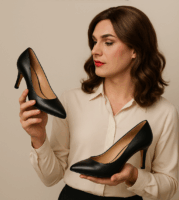 For many cross-dressers exploring their feminine presentation, shoes are more than just a finishing touch—they are the foundation upon which an outfit’s elegance rests. The right pair can make you feel confident, composed, and effortlessly stylish, while the wrong choice can leave you in pain, struggling to walk, or sending mixed messages about the image you want to project.
In the quest for feminine footwear, it’s easy to be seduced by towering stilettos, glittery platforms, or the latest statement sneakers. While these can be fun for a night out or a bold fashion experiment, they aren’t always the best choice for day-to-day wear—especially when you’re aiming for a classy, professional, or subtly refined look.
For most cross-dressers—particularly those who value long-term comfort, confidence, and polish—low heels, kitten heels, and classic flats often strike the perfect balance. They offer elegance without sacrificing walkability, style without screaming for attention, and femininity that reads as mature and tasteful.
Footwear matters when crafting a refined feminine appearance,. It matter that you choose shoes that match your outfits and needs, and maintain them so they remain a reliable style ally.
Why Footwear Is the Unsung Hero of Feminine Presentation
When you think about creating a feminine look, you might start with dresses, skirts, or blouses. Shoes can seem like an afterthought—until you see how much they can make or break the entire outfit. Footwear affects your posture, your silhouette, and even your mindset.
- Posture & Movement: Well-chosen shoes encourage a graceful stride and upright posture, both of which instantly elevate a feminine presentation.
- Visual Balance: Shoes can visually lengthen the legs, slim the ankle, or ground an outfit with a polished base.
- Social Signals: The style, condition, and coordination of your shoes send subtle cues about taste, lifestyle, and attention to detail.
- Confidence: When your shoes fit well, look elegant, and match the situation, you can focus on connecting with others instead of worrying about foot pain or awkward footing.
The best feminine footwear for a classy look blends style and comfort in a way that feels natural and sustainable. If you can’t imagine wearing them for more than two hours, they probably aren’t the best choice for everyday or professional settings.
Why Low Heels and Flats Win Over Flashy High Fashion
Many cross-dressers start with an image of ultra-high heels because they’re often portrayed as the pinnacle of femininity. But reality can be less forgiving.
- High stilettos: While undeniably glamorous, they put intense pressure on the balls of your feet, can strain calves and knees, and make walking smoothly a challenge. They also tend to feel out of place in many professional or daytime settings.
- Platform heels: These offer height but can feel bulky and harder to walk in, sometimes working against the refined, understated look you might be aiming for.
- Trendy sneakers: Comfortable, yes, but often too casual unless styled with intention. They rarely convey sophistication unless part of a deliberately casual-chic ensemble.
Low heels (1–2 inches), kitten heels, and classic ballet flats or pointed-toe flats often present the sweet spot:
- They give a gentle lift without sacrificing balance.
- They work across professional, semi-formal, and smart-casual outfits.
- They keep your gait smooth and poised.
- They’re less likely to draw attention for the wrong reasons—important if you’re still gaining confidence in public.
Understanding the Feminine Footwear Spectrum
When you start thinking about shoes as part of your wardrobe’s foundation, it helps to know the main categories that can serve you well.
Ballet Flats
- Best for: Casual workdays, errands, pairing with skinny trousers or A-line skirts.
- Why they work: Simple, understated, and timeless. They keep the focus on the outfit and let your movement remain natural.
- Style tips: Choose leather or suede over cheap synthetics for a more polished appearance. A small bow or subtle metallic accent adds interest without being flashy.
Pointed-Toe Flats
- Best for: Office wear, sleek dresses, tailored pants.
- Why they work: The pointed shape elongates the leg, adding a subtle elegance that round-toe flats sometimes lack.
- Style tips: Neutral colors like black, beige, or navy go with almost anything, while jewel tones make a chic statement.
Kitten Heels
- Best for: Dressier occasions, presentations, date nights.
- Why they work: Offer height without the instability of higher heels. Their slight elevation improves posture and works with both dresses and pants.
- Style tips: Look for slim, tapered heels rather than chunky ones for a more refined profile.
Low Block Heels
- Best for: All-day events, conferences, walking-heavy days.
- Why they work: The wider base distributes weight more evenly, making them comfortable without looking frumpy.
- Style tips: Pair with midi skirts or wide-leg trousers for balance.
Choosing Shoes That Complement Your Outfits
A shoe that looks stunning on the shelf might not do your outfit—or your presentation—any favors if it clashes with your wardrobe’s tone. Matching shoes to clothing isn’t about rigid rules but about harmony.
Coordinate Color Thoughtfully
- Neutral anchors: Black, beige, taupe, and navy shoes are wardrobe workhorses that blend seamlessly with most outfits.
- Seasonal variation: Lighter neutrals in spring/summer, richer tones in fall/winter.
- Pop of color: If your clothing is mostly neutral, a bold shoe (red, emerald, deep plum) can add a focal point—but keep the style classic.
Balance Proportions
- Slim shoes (pointed or almond toes) pair well with slim trousers or pencil skirts.
- Fuller skirts or wide-leg pants can handle slightly chunkier heels or rounder toes.
- Avoid overly heavy shoes with delicate fabrics—they can visually “weigh down” the outfit.
Match Formality
- A business suit calls for sleek flats or modest heels—not sparkly sandals.
- A cocktail dress can work with kitten heels or elegant low pumps.
- Casual sundresses look charming with ballet flats or low wedges.
Comfort: The Non-Negotiable Factor
Even the most beautiful shoe will sabotage your confidence if it hurts to wear. Cross-dressers—especially those new to wearing traditionally feminine footwear—should make comfort a priority.
Fit Matters More Than Size Number
Women’s shoe sizing can differ between brands and styles. Always try them on, walk around, and check for pinch points or heel slippage. Insoles can help fine-tune fit.
Materials Make a Difference
Leather molds to your foot over time, offering both durability and comfort. Fabric shoes can be breathable but may stretch less predictably. Avoid stiff, cheap synthetics for all-day wear.
Toe Shape Influences Wearability
Pointed toes elongate the leg but can squeeze the toes if the shoe runs narrow. Almond or rounded toes tend to be more forgiving.
Heel Placement & Support
A heel that sits directly under your own heel bone will feel more stable. Look for shoes with padded footbeds or arch support if you plan to stand or walk a lot.
Breaking In New Shoes Without Pain
Don’t make the mistake of wearing brand-new shoes for a full day right away—especially if you’re going out en femme for a longer event.
- Wear them around the house for short periods to let them mold to your feet.
- Use blister prevention products or soft bandages in high-friction spots.
- Leather conditioners can soften stiff material.
- Alternate between pairs during the week to avoid over-stressing your feet.
Maintaining Shoes for a Polished Look
A scuffed, dirty, or worn-down shoe can undermine even the most elegant outfit. Proper care extends their lifespan and ensures you always look put-together.
Routine Cleaning
- Leather: Wipe with a soft cloth, condition regularly, polish for shine.
- Suede: Use a suede brush, avoid water exposure, and apply protective spray.
- Fabric: Spot-clean gently; avoid harsh detergents that can discolor.
Heel & Sole Checks
Inspect regularly for worn-down heel tips or thin soles. A cobbler can replace them—cheaper than buying new shoes and better for maintaining a favorite pair.
Storage
Use shoe trees or stuff with tissue to maintain shape. Keep them out of direct sunlight to avoid fading. Dust bags protect from scratches if you store multiple pairs together.
How the Right Shoes Elevate Professional Feminine Presentation
For cross-dressers navigating professional or semi-formal environments, your footwear choice can subtly reinforce credibility.
- Polished shoes signal professionalism: Clean, well-maintained shoes in classic styles suggest you value details.
- Comfort helps confidence: You can focus on your work or social interactions instead of foot pain.
- Appropriate style blends in: Low heels or flats in neutral tones keep the attention where you want it—on your skills, personality, and poise.
Over time, colleagues, clients, or acquaintances may not remember your exact shoes, but they will remember the impression you left. Shoes that work with your outfit instead of competing with it help ensure that impression is one of sophistication and composure.
Common Mistakes to Avoid
- Buying purely for looks without considering comfort.
- Over-relying on statement shoes—they can be fun, but too many flashy styles in your rotation can make your wardrobe feel disjointed.
- Ignoring maintenance until a small scuff becomes a big distraction.
- Wearing overly casual shoes in formal settings, or vice versa.
- Choosing the wrong heel height for your body’s comfort level—better to look poised in a 1.5-inch heel than wobbly in a 4-inch stiletto.
Building a Small but Mighty Shoe Wardrobe
If you’re just starting your feminine footwear collection, you don’t need dozens of pairs. Focus on quality, versatility, and balance.
A basic capsule might include:
- 1 pair of black pointed-toe flats (workhorse for office or evenings)
- 1 pair of nude or beige low heels (versatile with most dresses or skirts)
- 1 pair of ballet flats in a soft neutral (casual yet chic)
- 1 pair of slightly dressier kitten heels in black or jewel tone (for events)
From there, you can add seasonal shoes—like low wedges for summer or ankle boots for winter.
The Confidence Connection
Ultimately, the most stylish shoe is the one that lets you feel at ease in your presentation. Cross-dressing is as much about feeling feminine as it is about looking feminine. Shoes that fit well, match your outfit, and complement your movement help you step into your feminine self—literally and figuratively—without distraction.
When you can walk with purpose, stand without pain, and know your shoes align with the elegance you want to convey, every aspect of your presence becomes more assured.
That’s the quiet power of the right footwear choice: it doesn’t demand the spotlight, but it ensures you shine in it.
Choosing classy, comfortable footwear is one of the most practical and impactful steps you can take to refine your feminine presentation. Whether you’re dressing for the office, a dinner date, or a day out, low heels and classic flats often give you the perfect mix of elegance, wearability, and poise.
By focusing on fit, proportion, outfit coordination, and upkeep, you’ll not only look polished—you’ll also feel it in every step.
After all, femininity isn’t just about appearance; it’s about movement, ease, and the confidence to carry yourself with grace. And that begins from the ground up.
If you want a few tips on my favorite four pairs of women’s shoes that you might also like, check out my previous blog post on:
Comments
Footwear Fundamentals – Choosing Classy Shoes for Comfort and Style as a Crossdresser — No Comments
HTML tags allowed in your comment: <a href="" title=""> <abbr title=""> <acronym title=""> <b> <blockquote cite=""> <cite> <code> <del datetime=""> <em> <i> <q cite=""> <s> <strike> <strong>