
The Challenges and Complications of Budgeting for a Crossdressing Hobby
by Jenn der Bentson
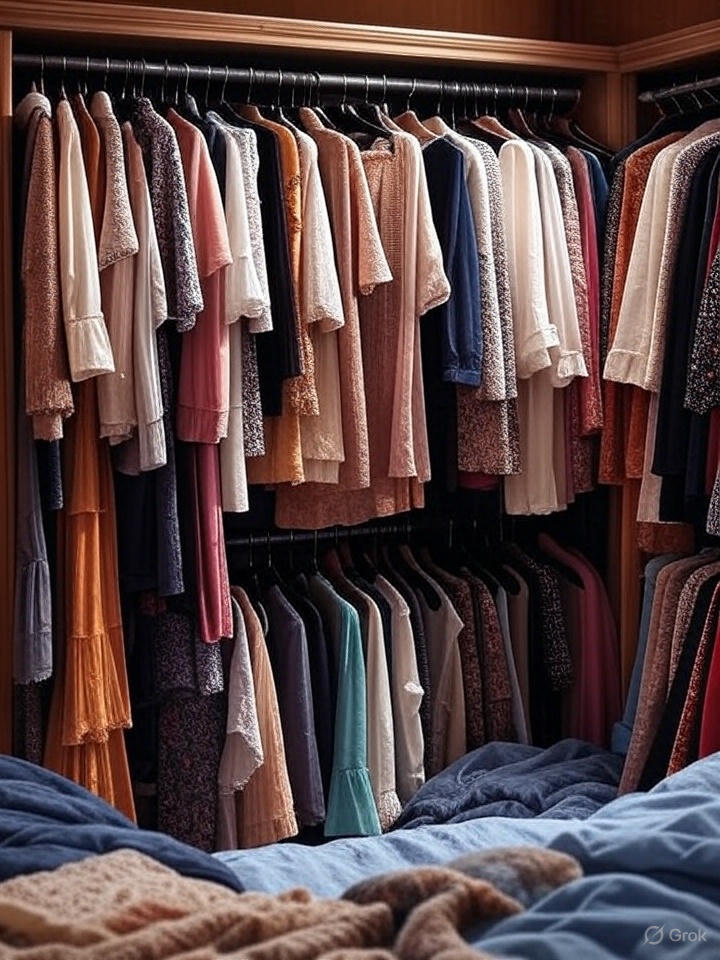 In a world where self-expression is increasingly celebrated, hobbies that allow us to explore different facets of our identity have become more common. Crossdressing, for many, is not just a pastime but a profound way to connect with aspects of themselves that everyday life might suppress. Whether it’s slipping into a elegant dress for a private evening at home or venturing out to a supportive community event, the act of crossdressing can bring joy, confidence, and a sense of liberation. However, like any hobby—from collecting vintage cars to gourmet cooking—crossdressing comes with its own set of financial demands. And when that hobby involves building an entirely separate wardrobe, the costs can add up quickly, leading to unique challenges in budgeting.
Discussion is often overlooked though about the financial side of crossdressing as a hobby. A crossdresser needs to think about how maintaining an extra wardrobe inherently brings expenses that go beyond the basics, the tricky terrain of concealing these costs in unsupportive relationships, the intertwined emotional and financial burdens of juggling dual wardrobes, and finally, why establishing a clear budget is crucial for keeping things sustainable. It can be helpful to build a roadmap for navigating these complications with greater awareness and control. Whether you’re just starting out or have been indulging in this hobby for years, understanding these elements can help turn potential pitfalls into manageable aspects of your lifestyle.
Crossdressing isn’t merely about clothing; it’s about transformation, and that transformation requires investment. But as with any investment, it’s essential to weigh the returns—not just in terms of happiness but in financial stability. Let’s break it down.
The Hidden Costs of Building an Extra Wardrobe
When most people think about budgeting for clothing, they envision seasonal updates to their everyday wardrobe: a new pair of jeans here, a winter coat there. But for those who crossdress, the wardrobe isn’t just an extension—it’s a parallel universe. You’re essentially maintaining two sets of attire: one for your daily male presentation and another for your feminine expressions. This duality introduces a layer of costs that can sneak up on even the most frugal individuals.
First, consider the basics. Clothing itself is the obvious starting point. Women’s fashion tends to be more varied and trend-driven than men’s, which means options abound—but so do temptations. A simple outfit might include a dress, heels, stockings, and undergarments like bras or shapewear, each with its own price tag. Entry-level items from budget retailers like H&M or Amazon can start at $20-50 per piece, but for quality that lasts (and feels good against the skin), you’re looking at $100-200 per outfit. Multiply that by the desire for variety—casual day looks, evening glamour, seasonal adaptations—and suddenly, you’re investing hundreds, if not thousands, annually.
Accessories amplify this. Jewelry, wigs, makeup, and purses aren’t just add-ons; they’re essentials for a complete transformation. A decent wig can cost $50-300, depending on whether it’s synthetic or human hair, and makeup kits from brands like Sephora or drugstore alternatives can run $100-500 for a starter set. Then there’s maintenance: wigs need styling tools and storage, makeup expires and needs replenishing. These aren’t one-time purchases; they’re recurring expenses that chip away at your budget.
Storage and organization present another underestimated cost. If you’re keeping your feminine wardrobe separate (which many do for privacy), you might need dedicated space. This could mean buying storage bins ($20-50 each), renting a storage unit ($50-100/month in urban areas), or even investing in a second closet system. For those living in small apartments, creative solutions like under-bed storage or vacuum-sealed bags add up over time.
Beyond the tangible items, there are experiential costs. Crossdressing often involves learning and community. Online tutorials are free, but classes, books, or consultations with stylists can cost $50-200 per session. Attending events like drag shows or support groups might involve tickets ($20-100), travel, or even cover charges. If you’re exploring professionally, like hiring a makeup artist for a photoshoot, fees can escalate to $200-500.
Women’s clothing sizes and fits vary wildly between brands, leading to trial-and-error purchases—and returns aren’t always free. Opting for ethical or sustainable brands pushes prices higher, but skimping on quality can lead to discomfort or quick wear-out, necessitating replacements sooner.
In essence, the extra wardrobe isn’t just “extra”—it’s a comprehensive ecosystem that demands ongoing financial input. Without careful tracking, these costs can balloon, turning a liberating hobby into a source of stress. Recognizing this is the first step toward better management.
Navigating the Challenges of Hiding Expenditures in Relationships
One of the most delicate aspects of budgeting for crossdressing arises in relationships where your partner is unaware or unsupportive. Secrecy, while sometimes necessary for personal safety or emotional well-being, introduces a web of complications that extend far beyond the wallet. Hiding expenditures isn’t just about sneaking purchases; it’s about maintaining a double life that can strain trust, communication, and finances.
Imagine this scenario: You’re in a committed relationship, sharing finances to some degree—joint accounts, shared bills, or simply open discussions about money. Your crossdressing hobby is private, perhaps due to fear of judgment, rejection, or past negative experiences. Every purchase becomes a covert operation. Using cash to avoid credit card statements is one tactic, but in a cashless society, it’s increasingly impractical. Online shopping might seem discreet, but packages arrive at shared addresses, and tracking notifications can pop up on shared devices.
The financial gymnastics involved are exhausting. You might route purchases through gift cards bought in small increments to avoid suspicion, or use separate bank accounts funded by “side hustles” like freelance work. Apps like PayPal or Venmo can help, but they leave digital trails. Some resort to prepaid cards or even cryptocurrency for anonymity, but these come with fees—2-5% transaction costs that add to the overall expense.
Beyond logistics, there’s the risk of discovery. A forgotten receipt, an unexpected bank alert, or a curious partner reviewing statements can lead to confrontations. If your significant other doesn’t support the hobby, they might view the expenditures as frivolous or deceptive, escalating into arguments about priorities. “Why spend on dresses when we need to save for a house?” becomes a loaded question, ignoring the personal fulfillment the hobby provides.
This secrecy can also inflate costs indirectly. Rushed purchases to avoid detection might mean buying from less reputable sources, leading to poor quality and more frequent replacements. Storing items off-site, like in a friend’s garage or a locker, incurs additional fees. And if the relationship involves financial inequality—say, one partner earns more—the hidden spending can breed resentment if uncovered, potentially leading to demands for repayment or even relationship dissolution.
Emotionally, the toll is significant. Constant vigilance erodes mental energy, making the hobby less enjoyable. Guilt over lying, even by omission, can compound, leading to overcompensation in other areas—like extravagant gifts for your partner to assuage conscience—which further strains the budget.
If support is lacking rather than total unawareness, the challenges shift. Your partner might know but disapprove, viewing it as an unnecessary luxury. Budget discussions become battlegrounds: “We can’t afford both your suits and your skirts.” This can force compromises, like limiting purchases to sales or second-hand items from thrift stores or apps like Poshmark, which save money but require more time and effort.
Ultimately, hiding expenditures perpetuates a cycle of stress. Open communication, if safe, is ideal, but for many, it’s not feasible immediately. In such cases, strategic planning—setting aside a “personal allowance” in the budget—can provide breathing room without full disclosure. But remember, relationships thrive on trust; long-term secrecy often backfires, financially and emotionally.
The Emotional and Financial Implications of Dual Wardrobes
Maintaining a feminine wardrobe alongside a standard male one isn’t just a matter of doubling your clothing budget—it’s a profound intersection of emotions and economics. The financial outlay is tangible, but the emotional weight can make every dollar spent feel heavier, influencing decisions in ways that pure numbers don’t capture.
Financially, the implications are straightforward yet cumulative. Your male wardrobe might be practical: work shirts, pants, shoes—items with longevity and versatility. In contrast, a feminine wardrobe often emphasizes aesthetics and variety, leading to higher turnover. Trends change faster in women’s fashion, so that perfect little black dress might feel outdated in a year, prompting replacements. Sizing issues add complexity; bodies fluctuate, and women’s clothing isn’t standardized, resulting in ill-fitting buys that sit unused, wasting money.
The “addition” aspect means you’re not replacing; you’re expanding. Annual clothing budgets for the average person hover around $1,000-2,000, per consumer reports. For crossdressers, this could double or triple, especially if starting from scratch. Impulse buys—triggered by a sale email or a social media ad—can push this higher. Online platforms like Shein offer affordable options ($10-30 per item), but shipping and returns eat into savings. Higher-end choices from Nordstrom or ASOS provide better quality but at $50-200 per piece.
Emotionally, spending on a feminine wardrobe can evoke a mix of euphoria and anxiety. Each purchase affirms your identity, providing a rush of validation. “This outfit makes me feel seen,” you might think, justifying the cost. But in a society where crossdressing is still stigmatized for many, there’s underlying shame or fear. “Is this worth the money when I could be saving for ‘real’ things?” becomes an internal debate, leading to buyer’s remorse.
This emotional-financial nexus can manifest in overspending as a coping mechanism. On tough days, retail therapy in the form of a new lipstick or heels offers temporary relief, but it accumulates debt. Conversely, financial constraints can heighten emotional distress: denying yourself a desired item feels like suppressing part of your identity, leading to resentment toward your budget or even your male wardrobe obligations.
Social factors compound this. If your hobby is solitary, costs stay contained, but sharing it—via online communities or meetups—introduces peer influence. Seeing others’ hauls on forums like Reddit’s r/crossdressing can spark envy, prompting “keeping up” purchases. If family or friends are involved (positively or negatively), expenditures might include gifts or shared experiences, blending personal and relational finances.
Long-term implications include opportunity costs. Money spent on wardrobes is money not invested elsewhere—retirement, travel, education. For those in precarious financial situations, this can lead to high-interest credit card debt, with averages around 20% APR making small purchases balloon.
Balancing these requires self-reflection. Journaling about purchases—why you want them, how they make you feel—can reveal patterns. Therapy or support groups address emotional roots, potentially reducing impulsive spending. Financially, tracking apps like Mint categorize expenses, highlighting wardrobe creep.
Dual wardrobe’s implications are a dance between heart and wallet. Acknowledging both ensures the hobby enhances life without undermining stability.
The Importance of Crafting a Clear Budget to Curb Unnecessary Expenditures
In the face of these challenges, a clear budget emerges as a lifeline—a tool not just for restriction but for empowerment. Budgeting for a crossdressing hobby isn’t about denial; it’s about intentionality, ensuring your passion doesn’t derail your financial health.
Start with assessment. Track your current spending for a month using apps like YNAB (You Need A Budget) or simple spreadsheets. Categorize: male wardrobe, feminine wardrobe, accessories, storage, experiences. This reveals baselines—perhaps $200/month on feminine items versus $50 on male. Identify leaks: subscriptions to fashion sites, unused items.
Set goals. Decide what percentage of income goes to the hobby—say, 5-10% for non-essentials. If your take-home is $4,000/month, that’s $200-400. Allocate sub-categories: 50% clothing, 30% accessories, 20% maintenance. This prevents one area from dominating.
Prioritize needs versus wants. Essentials like foundational pieces (bras, wigs) come first; luxuries (designer heels) later. Use the 50/30/20 rule adapted: 50% needs (including both wardrobes’ basics), 30% wants (hobby expansions), 20% savings/debt.
Incorporate buffers for relationships. If hiding expenses, designate a “discretionary fund” from personal income, avoiding joint resources. For supportive partners, joint budgeting fosters transparency—perhaps a shared “fun money” pot.
Curb impulses with strategies. Implement a 48-hour rule: wait before buying. Shop second-hand via eBay, Depop, or thrift stores—savings of 50-70%. Join buy/sell groups in crossdressing communities for deals. Set alerts for sales on favored sites.
Review regularly. Monthly check-ins adjust for life changes—job loss might cut the budget; a raise could expand it. Tools like Excel templates or apps automate this.
Benefits extend emotionally. A budget reduces guilt, making purchases feel earned. It curbs regret by ensuring affordability, enhancing enjoyment.
For long-term sustainability, integrate with overall finances. Build an emergency fund covering 3-6 months’ expenses, including hobby costs. Invest surpluses.
In essence, a clear budget transforms chaos into control, letting your hobby thrive without compromise.
Budgeting for a crossdressing hobby is fraught with unique challenges, from the inherent costs of an extra wardrobe to the emotional intricacies of dual identities and relational secrecy. Yet, by recognizing these complications and embracing structured budgeting, you can navigate them effectively. Remember, this hobby is about self-discovery and joy—don’t let finances overshadow that. Start small: track, plan, adjust. Your wardrobe, and your peace of mind, will thank you.
Comments
The Challenges and Complications of Budgeting for a Crossdressing Hobby — No Comments
HTML tags allowed in your comment: <a href="" title=""> <abbr title=""> <acronym title=""> <b> <blockquote cite=""> <cite> <code> <del datetime=""> <em> <i> <q cite=""> <s> <strike> <strong>